
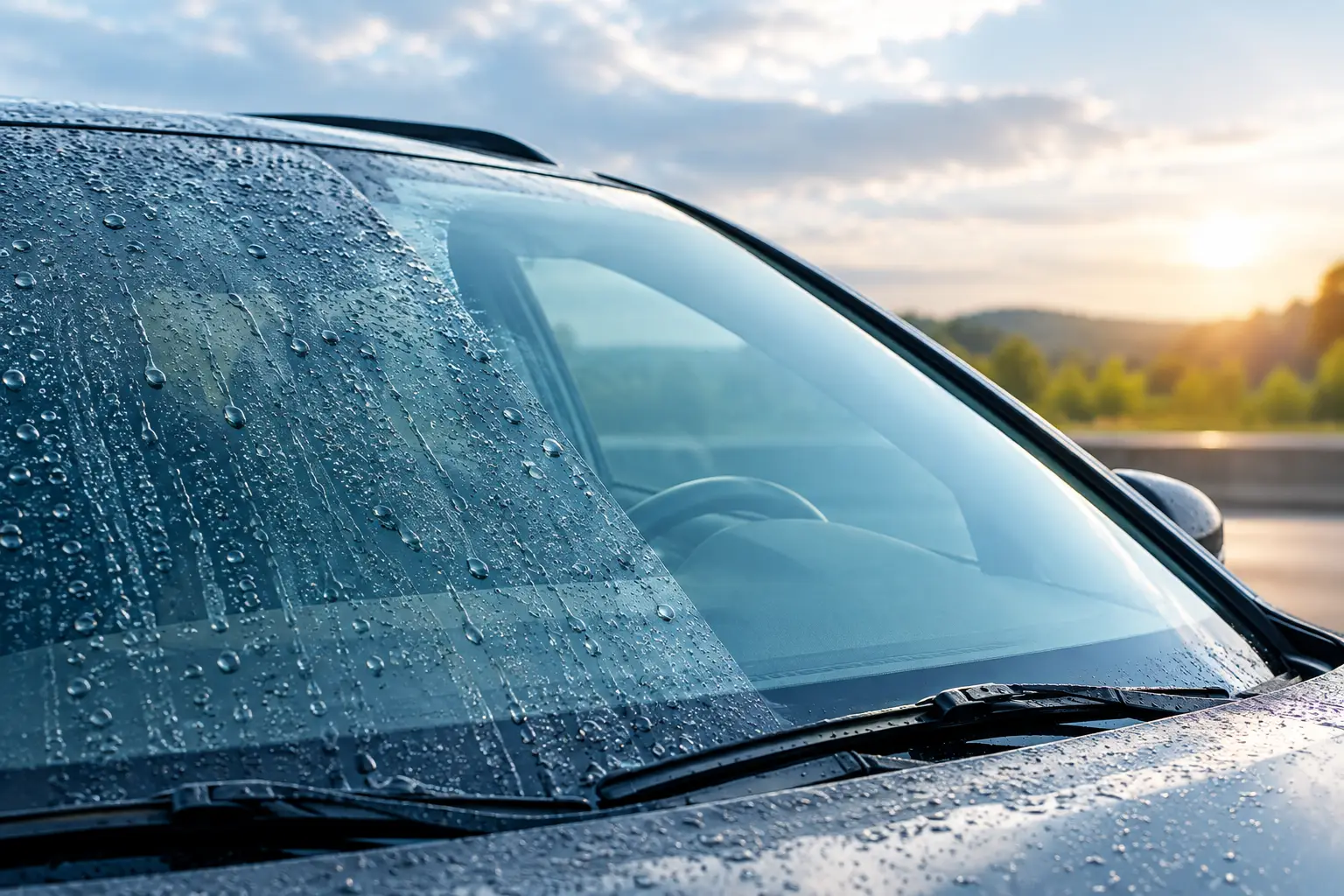
Rain on untreated auto glass does more than blur a driver’s view. It can spread into a film, collect road grime, and force frequent wiper use at the exact moment clear sightlines matter most. A windshield water repellent changes how water behaves on the glass, helping droplets bead and move away more readily in wet conditions.
For vehicle owners, that can mean clearer driving visibility and less stubborn residue. For dealerships, detailers, and automotive glass professionals, it creates a practical way to differentiate a vehicle-care offering with a benefit customers can see immediately.
What a Windshield Water Repellent Does
A quality windshield water repellent creates a hydrophobic surface on exterior glass. Rather than allowing rainwater to spread into a continuous sheet, the treated surface encourages water to form tighter droplets. At driving speed, airflow can help those droplets move off the windshield.
That behavior can improve visual clarity in light to moderate rain and reduce the amount of water left behind after a shower. It may also make it easier to remove bugs, road film, mineral deposits, and other contaminants during regular washing. The objective is not to eliminate windshield wipers. Wipers remain essential in heavy rain, low-speed traffic, and conditions where water accumulation exceeds what airflow can clear.
Performance depends on several variables: the condition of the glass, the quality of surface preparation, the coating chemistry, local weather, wiper condition, and how the vehicle is maintained. A repellent cannot overcome scratched glass, worn wiper blades, oily contamination, or a damaged windshield.
Why Hydrophobic Glass Matters in Wet Weather
Visibility is a safety issue, but it is also a maintenance issue. Untreated glass has microscopic surface irregularities where water, minerals, and airborne contaminants can settle. When rain dries, it can leave spotting and residue that gradually make the glass harder to clean.
Hydrophobic protection reduces surface wetting. The result is often easier cleanup, fewer water marks between washes, and a clearer appearance after routine exposure to rain and road spray. In climates with frequent rain, hard water, coastal salt air, or high levels of airborne dust, those advantages can be especially noticeable.
For automotive professionals, the benefit extends beyond the first test drive. A treated windshield supports a more complete vehicle-protection conversation alongside paint protection, interior care, and exterior detailing. It gives customers an everyday performance benefit instead of a purely cosmetic one.
Choose the Right Type of Windshield Protection
Not every glass treatment is designed for the same level of durability or use case. Short-term spray products can be useful for quick maintenance or occasional applications, but they generally require more frequent reapplication. They may be a sensible choice for drivers looking for a simple, low-commitment solution.
Professional-grade protective coatings are designed for longer-term performance when applied to properly prepared glass. These systems typically require more disciplined cleaning and application procedures, but they can offer a more durable hydrophobic effect and a stronger maintenance story for customers.
The right choice depends on the vehicle, service model, and customer expectation. A dealership adding a value-focused appearance package may prefer an efficient application process with clear aftercare instructions. A premium detailer may prioritize durability, surface preparation, and a documented warranty program. Fleet operators may place greater weight on consistency, labor efficiency, and the ability to maintain many vehicles to a common standard.
Preparation Determines the Result
A windshield water repellent performs only as well as the surface beneath it. Glass that appears clean can still hold traffic film, old product residue, silicone, mineral buildup, and oils transferred from washer fluids or wiper blades. Applying a coating over those contaminants can reduce bonding and create uneven water behavior.
Begin with a thorough wash, then use an appropriate glass-cleaning or restoration process to remove embedded residue. The glass should be fully dry and free of lint before treatment. If hard-water spotting, etching, or wiper marks are already present, restore the surface first rather than expecting the repellent to hide the damage.
Application should follow the manufacturer’s instructions precisely, including coverage rate, dwell time, buffing requirements, and cure time. More product is not necessarily better. Overapplication can leave haze or high spots, while incomplete removal can create distracting smears under headlights or direct sun.
Professional installers should treat windshield coatings as a controlled process, not an add-on applied between washes. Standardized preparation, clean towels, correct environmental conditions, and a final visibility inspection protect both the finish and the customer experience.
Do not overlook wiper blades
A treated windshield and worn wiper blades are a poor combination. Old blades can drag contaminants across the glass, chatter during operation, or leave streaks that make the coating seem ineffective. Inspect blades before delivery, and replace them when the rubber is cracked, hardened, or no longer clears the glass evenly.
Washer fluid also matters. Use a quality fluid suited to the climate and avoid products that leave heavy residue. In freezing regions, choose a formula with proper freeze protection rather than diluting it with water.
How to Maintain Treated Auto Glass
Routine maintenance is straightforward, but it should be deliberate. Wash the windshield regularly to prevent road film and minerals from accumulating. Use clean microfiber towels and automotive glass products that do not leave oily residue. Household cleaners can contain additives that streak, interfere with water behavior, or damage adjacent trim.
When water no longer beads or moves as expected, first clean the glass thoroughly. Loss of performance is sometimes caused by surface contamination, not coating failure. If cleaning does not restore the effect, use the approved maintenance product or schedule reapplication based on the coating system’s guidance.
Avoid abrasive pads, harsh powders, and aggressive scraping except where necessary for safe ice removal. These methods can wear the surface or introduce fine scratches. Parking under trees, driving on salted roads, and frequent use of automated car washes may also affect how long a treatment performs. Durability is never a single fixed number because real-world conditions vary widely.
Value for Dealerships, Detailers, and Glass Professionals
Windshield protection is a small surface area with a highly visible result. That makes it a useful service for professionals who want to build packages around practical ownership benefits. Customers understand rain, glare, water spots, and difficult-to-clean glass without needing a lengthy technical explanation.
The best programs connect coating performance to operational discipline. That means choosing a system with consistent application procedures, training support, restoration options for compromised glass, and a clear aftercare path. It also means setting honest expectations: hydrophobic treatment can support clearer wet-weather visibility, but it does not replace safe driving habits, functioning wipers, or regular glass care.
Diamon-Fusion International approaches glass protection as a complete surface-care system, pairing hydrophobic coating technology with application support, restoration products, and maintenance solutions. For businesses, that broader model can help turn a single glass treatment into a repeatable, serviceable offering rather than a one-time upsell.
A Better View Starts With Better Glass Care
The most effective windshield protection is not the product with the boldest claim. It is the one applied to clean, restored glass, matched to the driver’s conditions, and maintained with the same care given to the rest of the vehicle. When water sheds more cleanly and residue is easier to remove, drivers notice the difference every time the weather changes.