
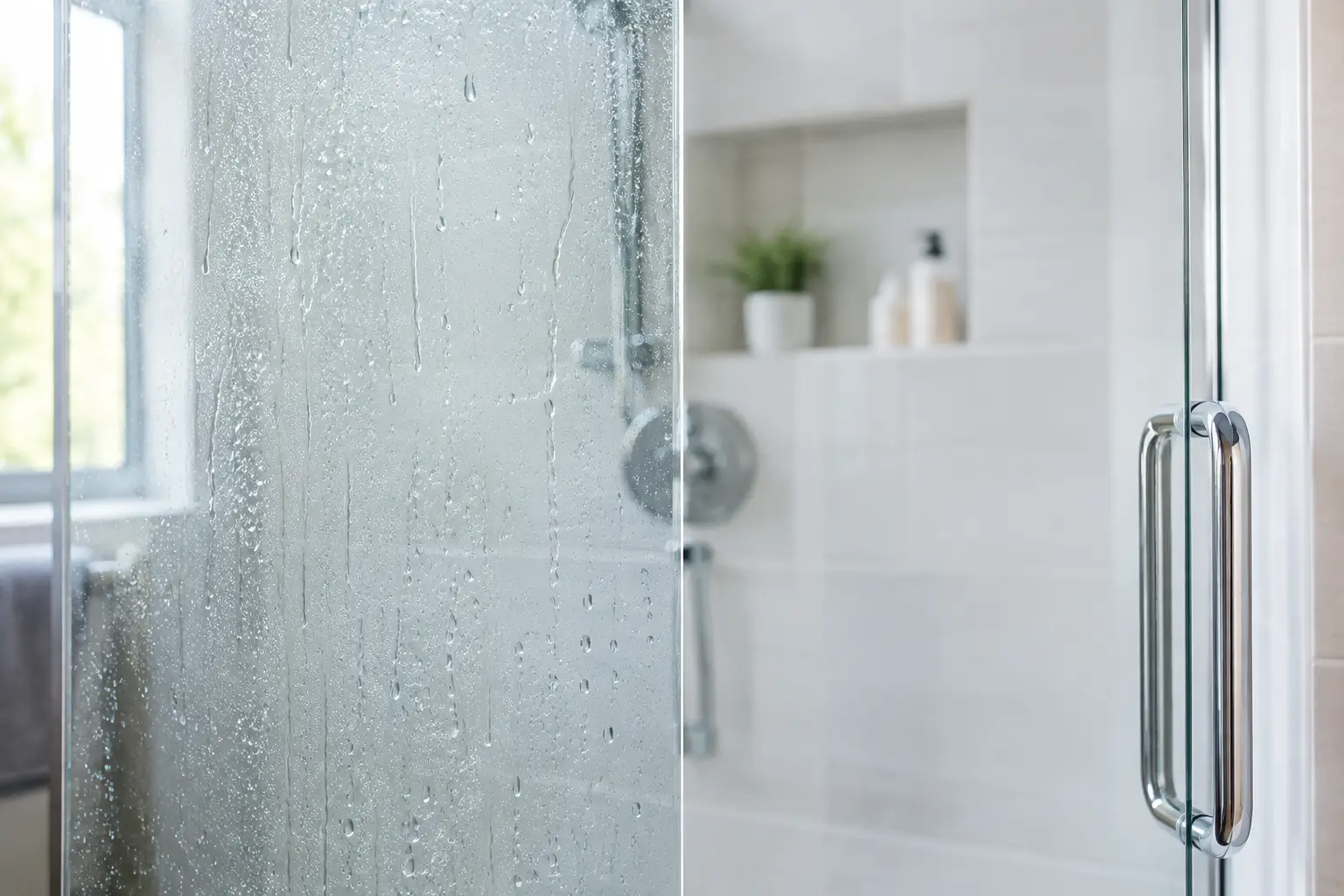
A new shower enclosure can lose its clear, high-end appearance faster than many owners expect. Water dries on the glass, minerals remain behind, and soap residue gives the surface a dull, hazy look. A professionally applied shower door coating changes how the glass interacts with water and daily-use contaminants, helping preserve clarity while reducing the effort required to keep the enclosure clean.
For homeowners, that means less time fighting hard-water spots. For shower-door fabricators, glaziers, and installers, it creates a valuable upgrade that differentiates the finished enclosure and gives customers a credible long-term maintenance solution.
What a Shower Door Coating Does
Shower glass may look smooth, but at a microscopic level, untreated glass has peaks, valleys, and pores that can hold water, mineral deposits, body oils, and soap scum. Once those contaminants dry or build up, routine cleaning becomes more difficult. Abrasive pads and harsh chemicals can then create another problem: surface damage that makes the glass appear even less clear.
A quality hydrophobic coating is engineered for silica-based surfaces such as glass. It modifies the surface so water beads up and sheds more readily instead of spreading across the panel. With less water remaining on the glass, there is less opportunity for dissolved minerals to dry into stubborn spots.
The result is not a shower door that never needs cleaning. It is a surface that is easier to maintain, more resistant to staining, and better positioned to retain its original appearance over time. That distinction matters. A coating should support a realistic aftercare routine, not promise maintenance-free glass.
Why Water Spots Become a Performance Problem
Hard water is one of the most common causes of shower-glass complaints. When water evaporates, it leaves mineral residue behind. Calcium, magnesium, and other dissolved solids can form visible white spots or a cloudy film, particularly in markets with hard municipal water or well water.
Soap scum adds another layer. It combines soap, oils, and minerals into a residue that can cling to untreated glass. In a busy household, hotel, multifamily property, or fitness facility, repeated use accelerates the buildup. The visual issue quickly becomes an operational one: more labor, more aggressive cleaning products, and greater risk of scratching or etching the surface.
A shower door coating helps interrupt that cycle. By increasing water repellency and reducing adhesion, it makes daily moisture and residue easier to remove before they become set-in deposits. In commercial settings, this can support more efficient cleaning protocols and a more consistent guest or resident experience.
Not All Shower Door Coatings Perform the Same
The term “glass protectant” can describe very different products. Some are temporary topical treatments that wear away quickly and require frequent reapplication. Others are engineered coatings designed to create durable protection through a chemical bond with the glass surface.
Professionals evaluating a coating program should look beyond initial water beading. Beading is visible and useful, but long-term value depends on the coating’s resistance to routine cleaning, environmental exposure, and repeated wet-dry cycles. The condition of the glass before application also matters. A coating can protect a clean, properly prepared surface, but it will not erase existing mineral staining, scratches, or corrosion without appropriate restoration work.
A complete system should address three stages: surface preparation, coating application, and aftercare. That is why coating chemistry alone is rarely enough for a fabricator or glazing contractor. Reliable results require process control, trained application, compatible restoration products, and maintenance guidance the end user can follow.
Factory Application Versus Onsite Application
Factory application can provide repeatability and production efficiency for shower-door manufacturers and fabricators. When integrated into a controlled workflow, coating becomes a defined value-added step rather than an inconsistent add-on. Application machinery can help standardize coverage and support throughput at scale.
Onsite application is often the practical choice for installed enclosures, remodels, and projects requiring glass restoration before protection. The key is proper inspection and preparation. Residue, fingerprints, fabrication debris, and existing damage should be addressed before the coating is applied.
Neither approach is universally better. Factory application is well suited to volume production and new glass. Onsite service can be ideal for retrofit work, specialty enclosures, and properties where replacing stained glass would be more expensive than restoring and protecting it.
The Business Value for Glass Professionals
A premium shower enclosure is often sold on its visual impact: minimal hardware, clear glass, polished metal, and an open feel. Yet the customer’s perception of quality changes when the glass looks spotted after a few weeks of use. Offering protective coating at the point of sale gives dealers and installers a direct answer to that concern.
The commercial case is equally clear. A coating upgrade can improve margin per enclosure while creating a differentiated service conversation. Instead of competing only on glass thickness, hardware, or installation price, a business can offer a maintenance-oriented benefit that remains relevant after installation.
For fabricators and shower-door manufacturers, a coating program can also strengthen partner relationships. Dealers gain a feature they can explain in practical terms: easier cleaning, reduced mineral staining, and better-looking glass. End users receive a product story that extends beyond the day of installation.
Diamon-Fusion International supports this model with patented coating technology, application equipment, surface-restoration solutions, and aftercare products designed to work as a coordinated system.
How to Maintain Coated Shower Glass
Hydrophobic protection performs best when maintenance is simple and consistent. After showering, a quick rinse and a soft squeegee or microfiber towel can remove most remaining water. This small habit is especially useful in hard-water areas, where minerals are concentrated as droplets dry.
Cleaning products matter as well. Avoid abrasive powders, steel wool, rough scouring pads, and tools that can scratch glass or wear down surface protection. Strong chemicals may be necessary for specific restoration situations, but they should not become the default for weekly cleaning. A nonabrasive cleaner intended for protected glass is generally the better choice for routine care.
For property managers and hospitality teams, standardized cleaning instructions can reduce guesswork among staff. The goal is not to add a complicated process. It is to prevent the buildup that demands labor-intensive correction later.
Choosing the Right Shower Door Coating Program
Homeowners should ask whether the coating is professionally applied, what kind of maintenance it requires, and whether the provider offers clear aftercare recommendations. A warranty can be meaningful, but only when its terms, maintenance expectations, and coverage are understood before purchase.
Industry professionals should evaluate the entire program. Consider the consistency of the application process, equipment requirements, training, restoration capabilities, dealer support, and the ability to supply compatible maintenance products. A coating that performs well in a sample demonstration but does not fit production or field operations may not deliver its projected value.
Project type should guide the decision. A luxury residential enclosure may prioritize appearance and homeowner convenience. A hotel or multifamily project may place greater emphasis on cleaning labor, replacement avoidance, and consistent presentation across many units. In either case, the best solution is the one that connects surface protection to the actual conditions the glass will face.
A shower door is used every day, so its maintenance story should be built into the sale from the beginning. Protecting the glass while it is clean, then giving the owner or facility team practical aftercare guidance, is one of the most effective ways to keep the enclosure looking like the investment it was meant to be.