
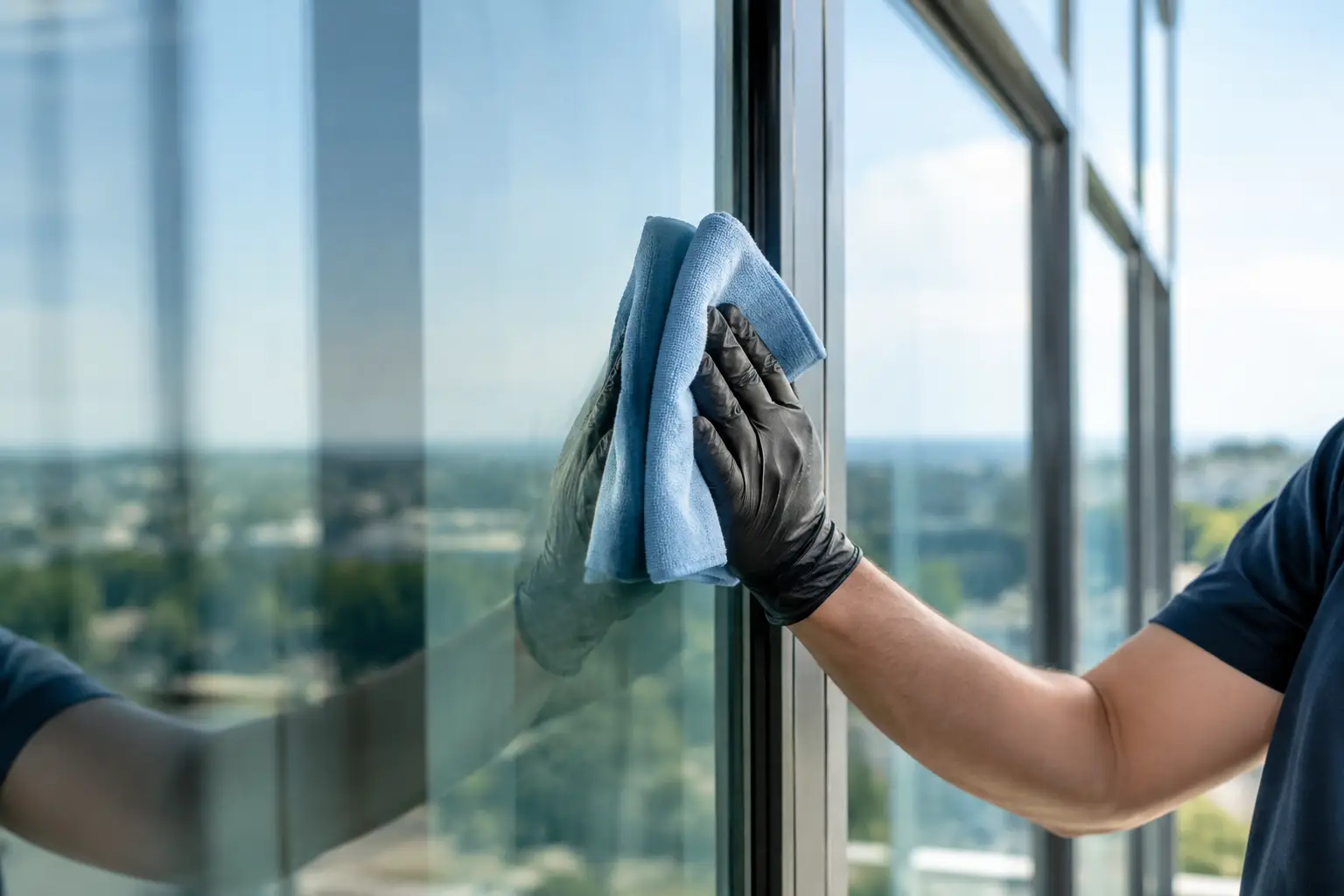
A shower enclosure can look permanently stained long before the glass itself has failed. A windshield may develop haze that makes night driving more difficult. On commercial facades, mineral deposits and surface contamination can diminish appearance while increasing maintenance labor. Glass restoration addresses these problems at the surface level, recovering clarity where possible and creating the right foundation for long-term protection.
For fabricators, glaziers, dealerships, property managers, and homeowners, the value is not simply a cleaner pane of glass. The right restoration process can extend service life, improve customer satisfaction, reduce replacement decisions, and support a more credible maintenance plan. The key is determining what is on the glass, how deeply it has affected the surface, and whether restoration is technically and commercially justified.
What Glass Restoration Can and Cannot Repair
Glass is hard, but it is not immune to damage. Mineral-rich water, soap residue, airborne pollutants, road grime, construction debris, and improper cleaning practices can alter how a surface looks and performs. Some contamination sits on top of the glass. Other damage etches into the surface, creating a rougher profile that attracts more soil and becomes increasingly difficult to clean.
Effective glass restoration begins with diagnosis. If discoloration is caused by removable deposits, a professional restoration product and proper technique may return the glass to a clear, uniform finish. If the damage includes light surface etching or fine scratches, specialized polishing processes may improve appearance. Deep scratches, chips, cracks, heat damage, distortion, or severe chemical attack may require replacement instead.
That distinction matters when advising a customer or preparing a project scope. Promising a perfect result on deeply damaged glass creates risk. A qualified assessment sets realistic expectations and protects labor margins by matching the method to the actual condition of the surface.
Deposits, stains, and etching are different problems
Hard-water spotting is often misunderstood. Minerals can leave white or gray deposits that appear to be stains. When left in place, those deposits can interact with moisture and cleaning chemicals, contributing to surface etching. A deposit may be removable. Etching is physical damage to the glass itself, so it requires a different level of correction and may not be fully reversible.
Soap scum presents a similar challenge in shower environments. It can bond with minerals and body oils, forming a film that ordinary household cleaners struggle to remove. In automotive applications, road film, water spots, and wiper abrasion can reduce windshield clarity. Architectural glass may face runoff staining, pollution, oxidation from nearby materials, and residue from construction activity.
A restoration program should identify the contaminant first, then select products and tools that will remove it without creating additional scratches, haze, or coating compatibility issues.
A Professional Glass Restoration Process
Consistent results come from process control, not aggressive scrubbing. The exact workflow varies by application, but the central objective remains the same: remove contamination, correct eligible surface damage, verify clarity, and protect the restored surface.
Inspect before selecting a remedy
Start with a close visual inspection under strong, angled lighting. Note the location and pattern of staining, visible scratches, drainage paths, and areas exposed to seals, hardware, or adjacent materials. Test a small, inconspicuous area before committing to a full restoration method.
This step also reveals whether a perceived glass problem originates elsewhere. Poor shower ventilation, leaking seals, incorrect drainage, sprinkler overspray, failing wiper blades, or runoff from building materials can quickly recreate the same issue. Restoration without correcting the source often leads to a callback rather than a lasting result.
Clean contaminants without compromising the surface
Use restoration products designed for glass and silica-based surfaces, following the manufacturer’s directions for dwell time, agitation, and rinsing. Abrasive pads, blades, and polishing compounds have a place in qualified hands, but they should never be treated as universal solutions. The wrong abrasive can create fine scratching or optical distortion that is more noticeable than the original stain.
Thorough rinsing and drying are essential. Residual cleaner, dissolved minerals, or polishing compound can obscure the true condition of the glass. For commercial teams, documented procedures help ensure that technicians achieve repeatable results across shower doors, storefronts, railings, windows, and other installed surfaces.
Correct eligible defects, then verify results
Polishing may improve light scratches and etched areas, but it involves trade-offs. Material removal must be controlled to preserve optical quality, especially on tempered glass, coated glass, laminated assemblies, and vehicle windshields. Large areas of severe etching can demand substantial labor with uncertain cosmetic improvement.
Once restoration work is complete, inspect the surface from multiple viewing angles. Look for residual spots, swirl marks, haze, or uneven appearance. On a windshield, verify visibility in the driver’s primary field of view. On architectural installations, evaluate the glass under the lighting conditions that matter to the client, including daylight and nighttime interior illumination.
Why Protection Should Follow Restoration
Restoration recovers a surface. Protection helps preserve the result. Without a protective step, newly cleaned glass remains exposed to the same water, minerals, soap residue, and contaminants that caused the original problem.
A hydrophobic protective coating changes how water behaves on the surface. Rather than spreading and clinging, water beads and releases more readily. This can reduce mineral spotting, limit soap-scum buildup, improve visibility in wet conditions, and make routine cleaning faster. The practical outcome is a surface that requires less intensive maintenance to maintain its appearance.
For shower-door manufacturers and dealers, restoration plus protection creates a stronger aftermarket story. Instead of positioning surface care as a one-time correction, it becomes a lifecycle service: restore neglected glass, apply protection, provide compatible aftercare, and establish clear maintenance guidance. That approach can support recurring revenue while helping customers avoid premature replacement.
For glazing contractors and building managers, the calculation often centers on labor. A protected surface may require less frequent deep cleaning and fewer aggressive interventions. Results depend on environmental exposure, cleaning practices, drainage design, and the coating selected, but the objective is consistent: lower the effort required to keep glass presentable.
Diamon-Fusion International supports this full-system approach with patented hydrophobic coating technology, restoration products, application machinery, and maintenance solutions for residential, automotive, and commercial glass applications.
Glass Restoration by Application
Shower doors and bathroom glass
Bathrooms are among the most demanding environments because warm water, minerals, soap, and limited ventilation work together daily. Restoration can remove accumulated deposits and improve transparency, but the customer must also understand ongoing care. A squeegee, adequate ventilation, and non-damaging maintenance products help prevent rapid recurrence.
For installers and dealers, applying protection after restoration gives homeowners a visible benefit: less water left on the surface and less time spent fighting stubborn spots. It also differentiates a shower enclosure from an untreated alternative.
Automotive glass
Windshield clarity is a safety and customer-experience issue. Water spots, road film, and wiper-related abrasion can scatter light, making glare more noticeable in rain or at night. Restoration should be conservative around automotive glass, particularly where damage is deep, cracks are present, or optical clarity could be affected.
After correction, a water-repellent surface treatment can improve wet-weather visibility by helping water move off the glass more efficiently. Dealerships and automotive-service providers can present this as a practical appearance and maintenance upgrade, not merely a cosmetic add-on.
Architectural glass, railings, and facades
On commercial projects, surface condition affects both visual quality and operating cost. Railings and exterior glass near irrigation, coastal air, traffic corridors, or hard-water runoff are especially vulnerable to staining. Restoration can be appropriate when the substrate is sound and the cost compares favorably with replacement.
For architects and specifiers, protection is most valuable when it is considered early. Factory or controlled onsite application, compatible cleaning protocols, and defined maintenance responsibility can help maintain the design intent long after project turnover.
Building a Maintenance Plan That Holds Up
The best restoration result can be lost through poor aftercare. Avoid treating all glass cleaners as interchangeable. Highly abrasive tools, inappropriate chemicals, and neglected drainage can undermine both restored glass and protective treatments.
A practical maintenance plan should define who cleans the glass, what products are approved, how frequently surfaces are inspected, and how mineral exposure will be managed. In a residential setting, that may be simple written guidance. In a commercial setting, it may be part of the facility’s cleaning specification and warranty documentation.
The most valuable glass restoration work does more than make a surface look better on the day it is completed. It gives the owner a clear path to keeping that clarity, whether the next rainfall hits a windshield, the next shower is used, or a building facade faces another season of exposure.