
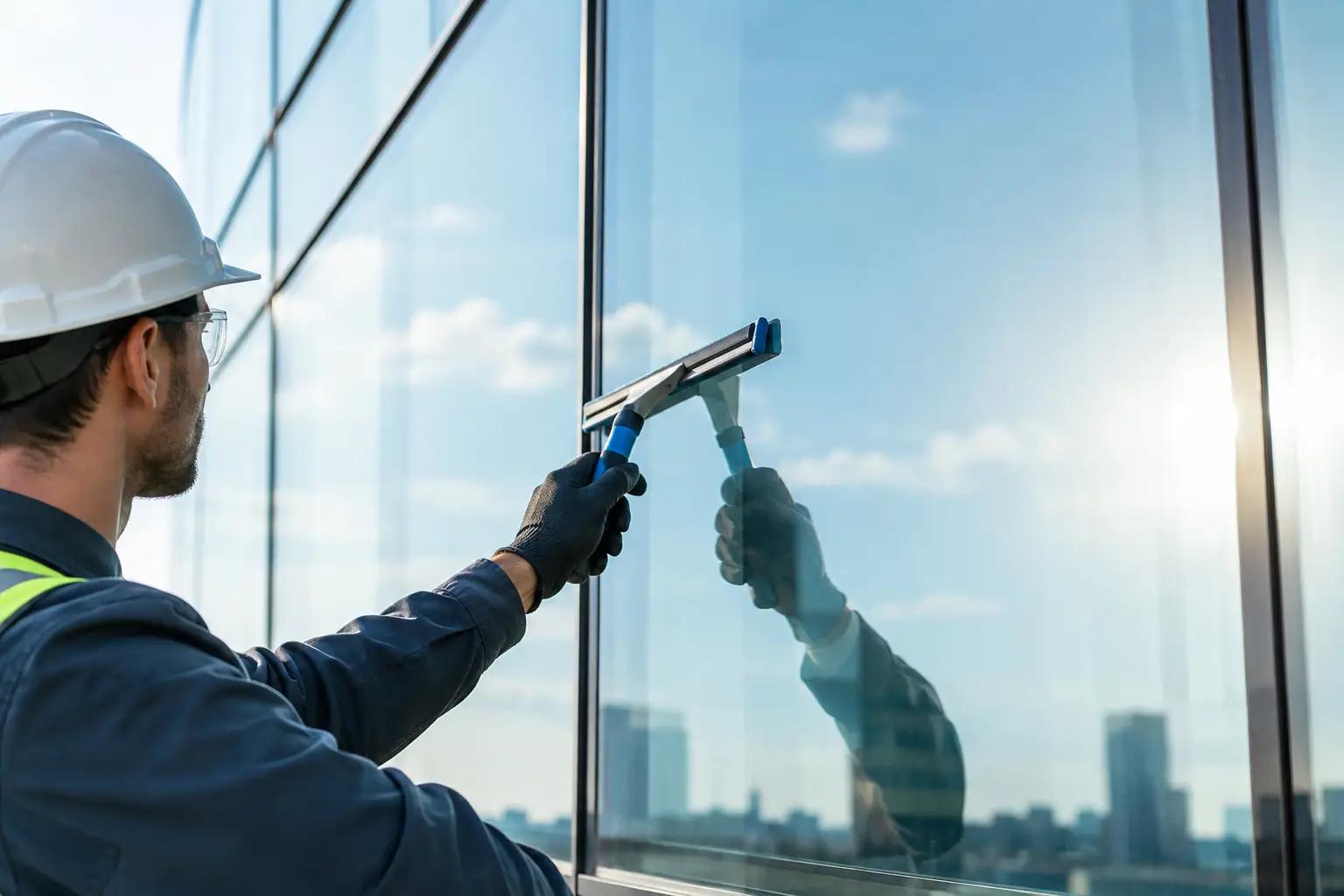
A premium glass facade can lose its intended impact quickly when hard-water spotting, runoff staining, and mineral deposits take hold. Architectural glass coating gives project teams a practical way to protect the clarity and finish of silica-based surfaces from the maintenance problems that begin after installation.
For architects, fabricators, glazing contractors, and facility teams, the value is not simply that glass looks cleaner on day one. The right coating strategy can reduce cleaning effort, preserve visual consistency across a building envelope, and give owners a more credible long-term maintenance plan. Those advantages matter most where glass is exposed to weather, frequent washdown, coastal conditions, irrigation overspray, or high-touch public use.
What Architectural Glass Coating Is Designed to Do
Architectural glass coating is a surface treatment engineered to change how water and contaminants interact with glass. Hydrophobic coatings repel water, encouraging droplets to bead and roll away rather than spread into a film. This helps reduce the opportunity for minerals, soap residue, and airborne contaminants to dry onto the surface.
That distinction is significant. Most visible glass staining is not caused by water alone. It is caused by what remains after water evaporates: calcium, magnesium, silica, salts, and environmental debris. Once these deposits bond to glass, routine cleaning becomes slower and more aggressive. Over time, improper cleaning tools and chemicals can create additional damage through scratching, haze, or surface degradation.
A professionally applied protective coating helps create a more maintainable surface. It does not make glass maintenance-free, and it should not be presented that way. Instead, it can reduce the frequency and intensity of cleaning required to keep glass looking clear, particularly in demanding locations.
Why Coated Glass Creates Value Beyond Appearance
Visual performance is often the first reason a project team considers a coating. On storefronts, balcony railings, curtain walls, entry systems, and interior partitions, clean glass supports the design intent. Stained or hazy glazing can make an otherwise well-executed project appear neglected.
The commercial case, however, extends further. Building owners and facility managers are managing labor costs, access constraints, tenant expectations, and cleaning schedules. When glass is easier to clean, maintenance personnel may spend less time treating persistent spots or escalating to restoration work. On difficult-to-access surfaces, even modest reductions in cleaning frequency can have meaningful operational value.
For fabricators and glazing professionals, a coating can also be a product differentiator. Rather than supplying glass as a commodity, they can offer a complete protection and aftercare solution. That creates an opportunity to address a concern customers often raise after the project is complete: how to keep the glass looking like it did at handover.
Where Protection Has the Strongest Payoff
Not every glass surface faces the same risk. A protected interior office partition has different needs than an exterior railing beside a pool deck. The best architectural glass coating decision starts with the environment, the water source, and the owner’s maintenance expectations.
Exterior facades, storefronts, and entrances
Exterior glazing is exposed to rain, pollution, dust, and runoff from surrounding materials. Canopies, ledges, seals, and metal framing can direct water over glass in repeatable patterns, leaving visible marks as it dries. A hydrophobic coating can help reduce water retention and make periodic cleaning more efficient.
It is especially useful to assess locations near landscaping. Irrigation overspray is a common source of mineral spotting, and it can affect isolated panels long before the rest of a facade shows visible buildup. Correcting sprinkler direction remains the first line of defense. A coating supports that effort but cannot compensate for continuous, uncontrolled overspray.
Glass railings and balconies
Railings are highly visible and frequently exposed to rain, ocean air, pool water, fingerprints, and cleaning residues. Their low angle and exposed edges can make spotting particularly noticeable. Protective treatment can help simplify routine care while supporting a cleaner, more consistent appearance across multi-unit residential and hospitality properties.
Shower glass and amenity spaces
In hotels, multifamily developments, fitness facilities, and residential projects, shower glass is one of the most logical applications for hydrophobic protection. Daily water exposure, soap scum, and mineral deposits create a predictable maintenance burden. A coated shower enclosure can be easier for housekeeping staff, property managers, and residents to maintain when paired with the right aftercare instructions.
Interior public-facing glass
Lobby partitions, elevator surrounds, conference-room walls, and glass doors may not face weather, but they receive fingerprints, hand oils, and frequent cleaning. Here, the benefit may be less about mineral resistance and more about maintaining a polished appearance with fewer harsh cleaning interventions. Application should still be matched to the substrate, usage level, and cleaning regimen.
Coating Performance Depends on Preparation
The coating itself is only part of the system. Glass must be properly cleaned, assessed, and prepared before application. Existing mineral staining, construction residue, adhesive contamination, or surface damage can interfere with appearance and performance if it is not addressed first.
This is where experienced installers and fabricators create a real advantage. They can identify whether a panel needs standard preparation, restoration, or replacement before a coating is applied. Applying protection over visible stains does not remove them. In some cases, it may make an existing defect more apparent because the surrounding surface becomes clearer.
Application consistency matters as well. Large commercial projects need defined procedures for handling, surface preparation, cure time, quality control, and post-application inspection. Coating machinery can improve repeatability for fabricators processing volume, while onsite application may be the better fit for installed railings, shower enclosures, and renovation work.
Diamon-Fusion International supports this full-system approach with patented coating technology, application equipment, restoration products, and aftercare solutions designed for glass businesses and their customers.
Specify the Maintenance Plan Along With the Coating
A coating is most effective when the owner understands how to care for it. This should be part of the closeout conversation, not an afterthought after staining appears.
Avoiding abrasive pads, razor blades, and unsuitable chemicals helps preserve both the glass and the coating. Regular cleaning with appropriate products prevents contaminants from building up, even on hydrophobic surfaces. In hard-water regions, prompt removal of standing water and mineral residue remains good practice.
For commercial properties, the maintenance plan should identify who is responsible for cleaning, what products are approved, how often surfaces are inspected, and how issues such as irrigation overspray or runoff will be corrected. This level of clarity protects the owner’s investment and reduces the chance that a surface-performance issue is actually a cleaning-process issue.
Questions to Ask Before Selecting a Coating System
Project teams should evaluate a coating based on more than a general claim of water repellency. Start with the substrate and application: Is the surface clear glass, coated glass, textured glass, mirror, ceramic, or another silica-based material? Is treatment happening in a controlled fabrication environment or after installation?
Then consider exposure. A glass railing around a pool, a coastal hotel facade, and an office lobby door each face different contaminants. The coating, application method, warranty coverage, and maintenance protocol should reflect those conditions.
Finally, examine the provider’s ability to support the full lifecycle. A credible coating program includes more than a bottle of chemistry. Look for documented application procedures, trained partners, restoration options for pre-existing damage, compatible maintenance products, and a clear path for warranty and technical support.
A Better Finish Starts With Better Planning
Architectural glass is selected for transparency, light, and clean visual lines. Protecting those qualities requires planning for the environment the glass will face after the project opens. When a coating is specified as part of a broader surface-care strategy, it can help owners reduce avoidable maintenance pressure while helping glass professionals deliver a more complete, defensible solution.
The practical next step is to identify the glass surfaces most vulnerable to water, minerals, and visible buildup before finalizing the cleaning budget or closeout package. That is where a well-matched coating program can produce value long after installation day.