
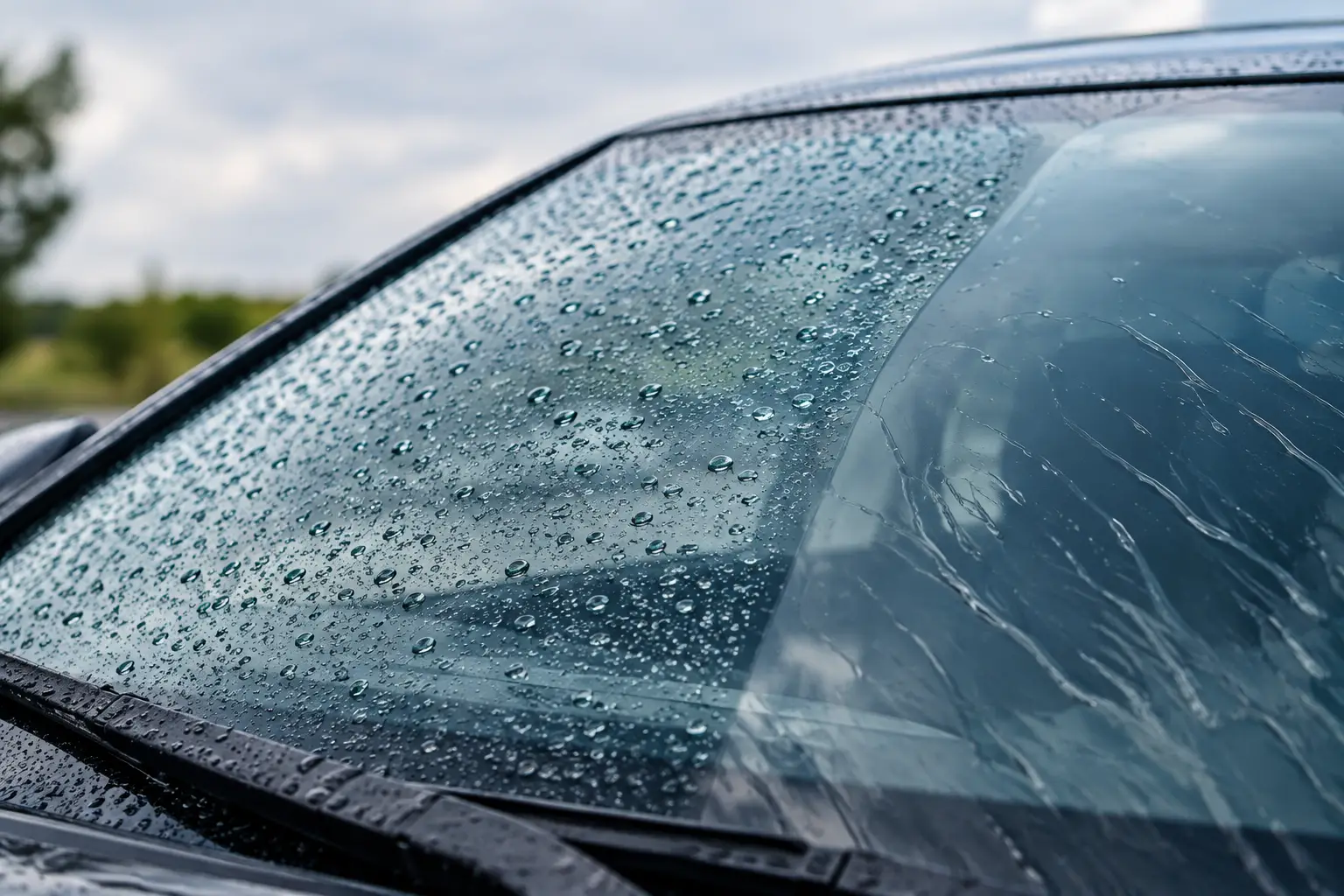
Rain changes the way drivers see the road long before it changes the road itself. Water sheets across untreated glass, headlights scatter through droplets, and worn wiper blades can leave a hazy film at the worst possible moment. A windshield coating for rainy weather addresses one part of that problem by changing how water behaves on the glass.
Rather than allowing rainwater to spread into a continuous sheet, a quality hydrophobic coating encourages droplets to bead and move off the windshield. At driving speed, airflow helps carry those droplets away, helping maintain a clearer view ahead. For vehicle owners, that can mean less visual distraction in wet conditions. For dealerships, detailers, and automotive glass professionals, it creates a practical protection upgrade with a clear customer benefit.
How a Hydrophobic Windshield Coating Works
Automotive glass may look smooth, but at a microscopic level it contains tiny peaks, valleys, and reactive sites that allow water, road film, mineral deposits, and contaminants to cling to the surface. A professional-grade coating is engineered to bond with the glass and create a lower-surface-energy barrier. Water has less opportunity to spread, so it forms more rounded droplets instead.
This is the difference between rain smearing across a windshield and rain beading into droplets that can roll away. The effect becomes most noticeable at highway speeds, where moving air assists water removal. Drivers may need the wipers less often in light to moderate rain, although wipers remain essential equipment for heavy rain, low-speed driving, and safe operation.
The best results come from a coating that is designed for silica-based surfaces, properly applied to a thoroughly cleaned windshield, and supported with compatible aftercare. Hydrophobic performance is not simply a cosmetic finish. It depends on surface preparation, coating chemistry, curing conditions, and how the glass is maintained after application.
What Windshield Coating for Rainy Weather Can Improve
A hydrophobic windshield treatment does not make poor weather disappear. It can, however, improve the conditions drivers deal with every day. In wet weather, clearer water behavior can reduce the broad, distorted water film that obscures lane markings, vehicles, and changing traffic conditions.
The benefit extends beyond rainfall. Windshields collect bug residue, dust, road grime, tree sap, and mineral-rich water from sprinklers or car washes. When contaminants bond directly to untreated glass, cleaning can require more time and more aggressive effort. A protective coating can make routine cleaning easier because dirt and water have less direct contact with the surface.
For customers who park outdoors, this matters year-round. A windshield that is easier to clean is more likely to receive regular care, which helps preserve a crisp, professional appearance. Dealerships and automotive service providers can position this as an ownership benefit, not just an add-on for stormy days.
Visibility Is About More Than Rain Beading
Water repellency is the most visible effect, but visibility depends on the entire condition of the windshield. Fine scratches, etched mineral spots, damaged wiper blades, interior haze, and road-film buildup can all interfere with sightlines. A coating works best after the glass has been properly restored or decontaminated.
That distinction matters when setting customer expectations. A hydrophobic coating can help rain move off a clean, sound windshield. It cannot repair deep scratches, remove a crack, correct distorted glass, or replace wiper blades that chatter and smear. Professionals who explain these limits build more trust than those who promise an unrealistic cure-all.
Application Quality Determines Performance
Not every water-repellent product delivers the same durability or consistency. Some consumer products create a short-lived beading effect but wear down quickly under wiper friction, weather exposure, washing, and road debris. Others can produce uneven results if oils, silicones, old residues, or mineral deposits remain on the glass before application.
Professional application begins with inspection and preparation. The windshield should be cleaned of road film and residues, then evaluated for damage and surface defects. The coating is applied according to the manufacturer’s process and allowed to cure correctly. Skipping preparation may save minutes, but it can compromise bonding and shorten the useful life of the treatment.
For automotive dealers and glass businesses, a repeatable process is commercially important. Consistent surface preparation and application help reduce rework, support a better customer experience, and make the protection package easier for staff to explain. A coating program backed by training, application tools, and maintenance guidance is more scalable than a one-off product with no defined process.
Durability Depends on Use and Maintenance
There is no single durability timeline for every windshield. A vehicle driven daily on highways in harsh sun, frequent rain, dust, and winter road conditions will place different demands on a coating than a lightly driven garage-kept vehicle. Wiper use is also a major factor because blades create mechanical friction over the treated surface.
Maintenance habits matter as well. Abrasive cleaners, contaminated wash tools, and neglected wiper blades can diminish performance. In contrast, regular cleaning with appropriate products helps preserve both appearance and water repellency. When beading begins to weaken, the surface may need cleaning, maintenance treatment, or reapplication depending on the coating system and the vehicle’s exposure.
This is why long-term value should be measured in maintenance reduction and customer satisfaction, not only in the first dramatic rain-beading demonstration. A durable coating program gives customers a practical way to keep glass clearer between washes while providing service departments and dealers an ongoing aftercare conversation.
Where Coated Windshields Deliver the Most Value
Rainy-weather visibility is relevant to nearly every driver, but the value proposition changes by market. For a retail customer, the appeal is straightforward: less water buildup, easier cleaning, and a cleaner-looking windshield. For a dealership, hydrophobic protection can differentiate a vehicle delivery package and create a premium appearance that customers notice immediately.
Fleet operators and commercial drivers may focus more on cleaning efficiency and consistent vehicle presentation. In these environments, even small reductions in time spent removing water spots and road film can add up across a larger vehicle count. The right program should account for vehicle turnover, wash procedures, driver expectations, and the ability to maintain the coating over time.
Automotive glass shops can also benefit by offering a defined protective treatment after windshield replacement. A new windshield is an ideal moment to discuss long-term surface care because the glass is already receiving professional attention. The conversation should remain practical: the coating enhances water behavior and cleanability, while safe driving still depends on functioning wipers, proper defogging, tire condition, lighting, and responsible speed.
Choosing a Coating System, Not Just a Bottle
For professionals, the coating itself is only one part of the decision. Consider how the system supports the full customer journey: surface preparation, application consistency, curing, aftercare, warranty options, training, and product availability. Those details determine whether a service can be delivered confidently across multiple technicians or locations.
Patented coating technology can also provide meaningful differentiation when it is supported by documented processes and a credible manufacturer. Diamon-Fusion International approaches glass protection as a full system, combining hydrophobic coating chemistry with application support, restoration solutions, and maintenance products for long-term surface performance.
For consumers, the selection process should start with honesty about the desired outcome. If the goal is clearer wet-weather visibility and easier windshield cleaning, a professionally applied hydrophobic coating may be a worthwhile investment. If the windshield has chips, cracks, severe scratching, or persistent haze, address those conditions first.
A well-maintained coated windshield will not replace attentive driving in the rain. It can make the glass easier to manage, the view ahead clearer, and the vehicle’s routine care more efficient – exactly the kind of everyday improvement that becomes most valuable when the weather turns.