
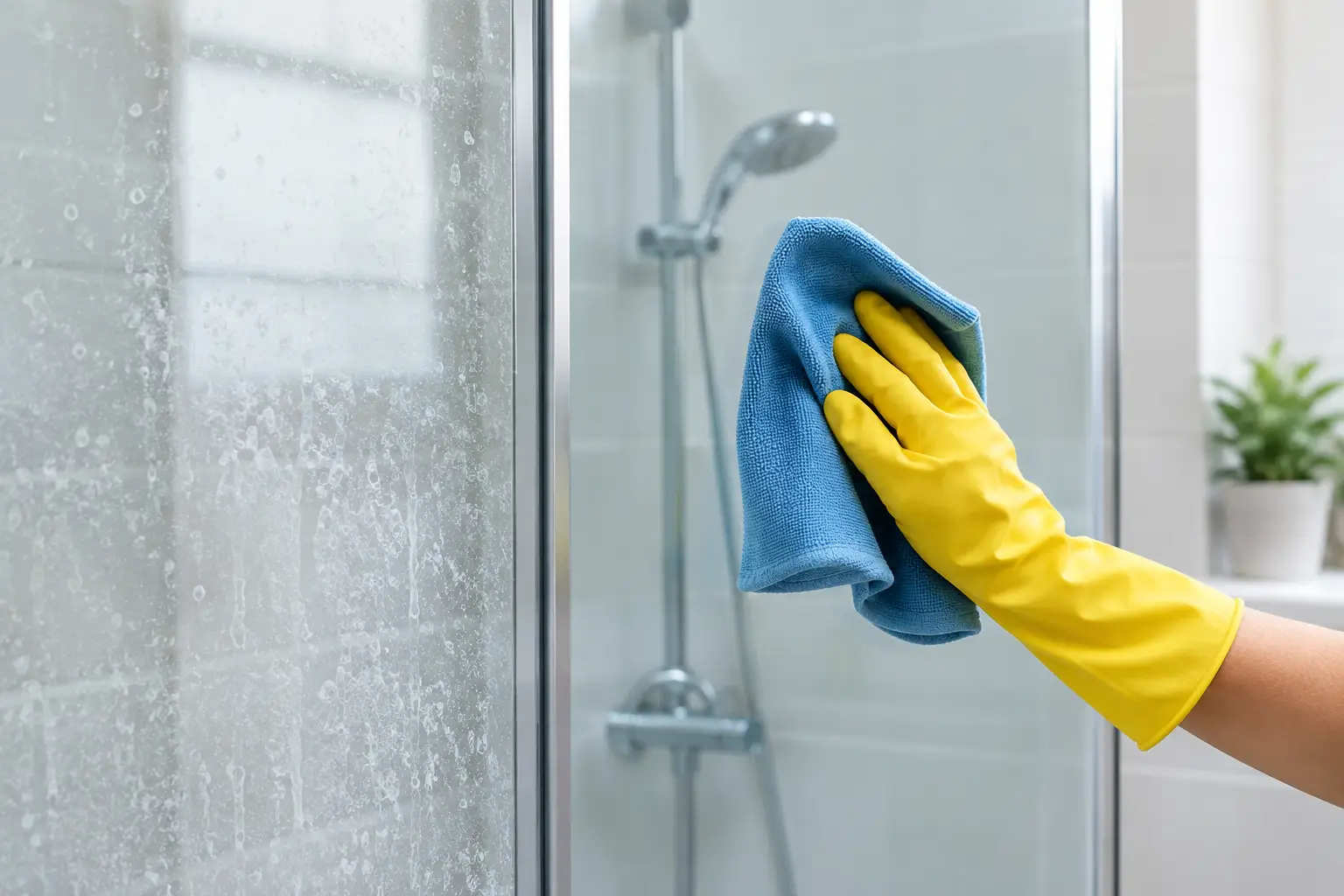
A shower door can look cloudy again only days after cleaning, especially where hard water and bar soap are part of the routine. Knowing how to remove soap scum from shower doors means treating the buildup without scratching the glass, damaging metal hardware, or leaving behind residue that attracts the next layer of film. The most effective approach combines the right restoration method with a maintenance routine that reduces how often heavy cleaning is needed.
Why Soap Scum Builds Up on Shower Glass
Soap scum is more than ordinary dirt. Traditional soap contains fatty compounds that react with minerals in water, particularly calcium and magnesium. Add body oils, shampoo residue, and water that dries on the glass, and the result is a dull, stubborn film. In areas with hard water, mineral deposits can form at the same time, creating a rougher surface that holds even more residue.
Fresh soap scum usually feels slick or waxy and responds well to gentle cleaning. Older buildup may look white, gray, or hazy and can feel rough to the touch. At that point, the issue is often a combination of soap residue and mineral scale. Leaving it in place for months can make cleaning more labor-intensive and, in severe cases, contribute to permanent-looking glass damage.
The goal is not simply to make the door shine for one day. It is to restore a clean glass surface, protect adjacent materials, and prevent repeat buildup from becoming a costly maintenance problem.
How to Remove Soap Scum From Shower Doors Safely
Start by identifying the door material and its condition. Most shower enclosures use tempered glass, but frames, handles, seals, and nearby tile may react differently to cleaners. Natural stone, unsealed grout, anodized metal, and painted finishes require particular care. Test any cleaner in an inconspicuous area before applying it across the full door.
Begin with a mild cleaning pass
For light or recent soap scum, use a nonabrasive, glass-safe shower cleaner and a soft microfiber cloth or non-scratch sponge. Apply the cleaner to a cool, dry door according to its directions, then allow it to dwell long enough to loosen residue. Avoid letting the product dry on the glass.
Work from top to bottom using overlapping strokes. Rinse thoroughly with clean water and dry the door with a squeegee or microfiber towel. Drying matters because it removes the mineral-bearing water that creates new spots as it evaporates.
Escalate carefully for stubborn buildup
If a mild cleaner does not remove the haze, use a purpose-designed glass restoration or soap-scum removal product formulated for shower glass. These products are generally a better choice than improvising with harsh household chemicals, especially on doors with protective coatings or close to vulnerable tile and hardware.
Apply only the amount needed and use a nonabrasive applicator. Let the chemistry do the work rather than applying heavy pressure. Agitating aggressively with abrasive pads, steel wool, pumice, or a razor blade can create fine scratches that scatter light and make glass appear permanently cloudy. Those microscopic scratches also provide more places for minerals and soap residue to anchor.
A mildly acidic household solution may help with mineral deposits on untreated glass, but it is not a universal answer. Acidic products can affect natural stone, grout, caulk, metal finishes, and some protective treatments. Never mix cleaning products, particularly acids and bleach. When the shower includes specialty surfaces or a coated door, follow the coating or enclosure manufacturer’s care instructions rather than assuming a common DIY solution is safe.
Rinse completely and inspect in good light
A door can look clean while wet but show streaks after drying. Rinse the entire panel, including the edges near the frame, then dry it fully. Inspect from different angles with the bathroom lights on. If cloudiness remains only in certain zones, repeat the targeted treatment rather than increasing abrasion across the whole panel.
If the door still appears etched, rough, or permanently milky after cleaning, the problem may no longer be removable surface residue. Professional assessment or glass restoration may be appropriate, particularly for a high-value enclosure, hospitality property, or multifamily maintenance program.
What to Avoid When Cleaning Shower Doors
The fastest-looking method is not always the lowest-risk method. Avoid abrasive powders, scouring pads, steel wool, and tools intended to scrape paint or decals from glass. Even when they remove buildup, they can compromise appearance and increase future cleaning requirements.
Also avoid treating every haze as soap scum. Silicone residue, construction debris, hard-water scale, etching, and cleaner film may need different solutions. Repeatedly applying stronger chemicals to the wrong problem wastes labor and can damage surrounding materials.
For commercial teams, this distinction matters at scale. A cleaning process that takes five extra minutes per door can become a significant operating cost across a hotel, residential tower, fitness center, or multifamily portfolio. Standardizing the correct products, dwell times, tools, and aftercare practices improves consistency while reducing avoidable rework.
Prevent Soap Scum Before It Bonds to the Glass
The most efficient cleaning program is preventive. After each shower, use a squeegee to move water from the glass, then leave the enclosure open enough for air circulation. This small habit reduces standing water, mineral spotting, and the sticky surface film that turns into soap scum.
A weekly wipe with a compatible, nonabrasive maintenance cleaner is usually easier than a monthly restoration effort. In hard-water areas or high-use commercial showers, the schedule may need to be more frequent. The right interval depends on water chemistry, ventilation, the number of users, and whether the enclosure has a protective treatment.
Hydrophobic protective coatings can improve long-term cleanability by causing water to bead and release more readily from silica-based surfaces such as glass. This reduces the opportunity for minerals and soap residue to adhere, but it does not eliminate the need for regular care. A coated shower door should still be rinsed, squeegeed, and maintained with coating-compatible products.
Diamon-Fusion® is one example of a patented hydrophobic coating technology designed to help protect glass from water spotting, mineral staining, and soap scum while lowering ongoing maintenance demands. For fabricators, contractors, and property operators, this type of protection can also create a clearer aftercare story for the end user: cleaner glass, less intensive labor, and a more durable presentation over the life of the installation.
When Cloudiness Is Not Soap Scum
If the surface remains hazy after a careful cleaning and feels smooth rather than rough, the glass may have chemical etching or surface damage. Etching can occur when mineral deposits remain on the glass for long periods, when incompatible chemicals are used repeatedly, or when abrasive cleaning wears the surface.
Unlike soap scum, etching is not simply sitting on top of the glass. It alters how light passes through the surface, which is why the door may still look cloudy after multiple cleaning attempts. Restoration can sometimes improve the appearance, but results depend on the depth and extent of the damage. Replacing the panel may be the more practical choice in severe cases.
A clean shower door should not require aggressive scrubbing to stay clear. Remove buildup with compatible chemistry, dry the glass before minerals can settle, and address recurring haze early. That approach protects the enclosure’s finish, reduces cleaning time, and keeps the bathroom looking like it was designed to look.