
A glass canopy can look pristine at installation and visibly weathered within a single rainy season. The issue is rarely the glass itself. It is the mineral residue, airborne contaminants, and runoff left behind after water evaporates. To protect glass canopies from water stains, project teams need to address the surface, the water path, and the maintenance plan before staining becomes permanent.
For architects, glaziers, fabricators, and property managers, this is more than an appearance issue. Stained overhead glazing can diminish a building’s entry experience, trigger avoidable cleaning costs, and create client dissatisfaction on an otherwise high-value installation. A proactive protection strategy preserves visual clarity while reducing the labor required to keep the canopy looking specified.
Why Water Stains Form on Glass Canopies
Rainwater is not pure water by the time it reaches a canopy. It may carry dust, soot, pollen, salts, industrial pollutants, and minerals picked up from roofing materials, facade panels, sealants, or metal framing. When that water dries, it leaves contaminants on the glass. Repeated wet-dry cycles build visible spotting and streaking.
Hard water creates a more difficult problem. Water from irrigation overspray, leaking condensate lines, or building washdown often contains calcium and magnesium. As droplets evaporate, those minerals remain concentrated on the surface. Over time, deposits can chemically bond to glass and contribute to etching, which cannot be removed through ordinary cleaning alone.
Canopy geometry makes the issue worse. Flat or low-slope glass, inconsistent drainage, exposed edges, and areas below facade joints allow water to sit or repeatedly travel along the same path. Shaded areas can stay wet longer, while hot, sun-exposed panels dry quickly and leave sharply defined residue. The right solution depends on the site conditions, but surface protection should be part of every long-term plan.
Protect Glass Canopies From Water Stains at the Surface
A hydrophobic protective coating is one of the most effective ways to improve canopy performance. On untreated glass, water spreads across the surface and can dry into a broad film of mineral residue. A properly applied hydrophobic coating changes the surface behavior, causing water to bead and shed more readily. Less water remains in contact with the glass, which means fewer opportunities for minerals and contaminants to dry in place.
For commercial glazing, a coating should be evaluated as a performance system rather than a cosmetic add-on. The coating must be compatible with the glass type, fabrication process, application environment, and intended maintenance procedures. It should also support a credible aftercare process, particularly where the glass is difficult to access or cleaning labor is expensive.
Diamon-Fusion International’s patented Diamon-Fusion® coating is engineered for glass and other silica-based surfaces. Its hydrophobic performance helps reduce water spotting and improves cleanability, giving fabricators and glazing professionals a differentiated protection option for exterior applications. The value is not that glass will never require maintenance. The value is that routine cleaning can be faster, less frequent, and less likely to require aggressive chemistry.
Apply Protection Before Installation When Possible
Factory application offers important control advantages for canopy projects. Glass can be prepared, coated, and handled in a managed environment before exposure to construction dust, jobsite runoff, fingerprints, and sealant residue. It can also help fabricators standardize their process and deliver a more consistent finished product.
Onsite application can be appropriate for installed canopies, replacement panels, or restoration work, but preparation becomes more critical. The glass must be thoroughly cleaned and free of mineral deposits, oils, and residues that can interfere with coating performance. Applying a protective treatment over existing staining may lock in a visible problem rather than solve it.
Design Out the Sources of Staining
Coatings improve water behavior, but they cannot correct poor water management. During design review and installation planning, identify where water will land, collect, and discharge. A canopy that continually receives runoff from an upper facade or roof edge will need more than a cleaning schedule.
First, provide sufficient slope and drainage so water does not pond. Even shallow standing water can accelerate spotting, especially in hard-water regions. Confirm that gutters, drip edges, flashings, and drainage channels direct water away from the glass rather than onto it.
Second, keep irrigation heads clear of the canopy. Irrigation overspray is a common and preventable cause of hard-water spotting on exterior glass. This detail is particularly relevant at hospitality properties, retail entrances, multifamily developments, and landscaped corporate campuses.
Third, inspect adjacent materials. Unfinished metal runoff, deteriorating sealants, and runoff from certain stone or concrete surfaces can leave stubborn deposits. A glass canopy may be functioning perfectly while receiving contamination from another building component. Coordinating these interfaces early reduces future maintenance disputes.
Use a Maintenance Plan That Protects the Coating
Hydrophobic glass is easier to maintain, not maintenance-free. A practical program removes surface contaminants before they accumulate, while avoiding products and tools that can damage the glass or compromise coating performance.
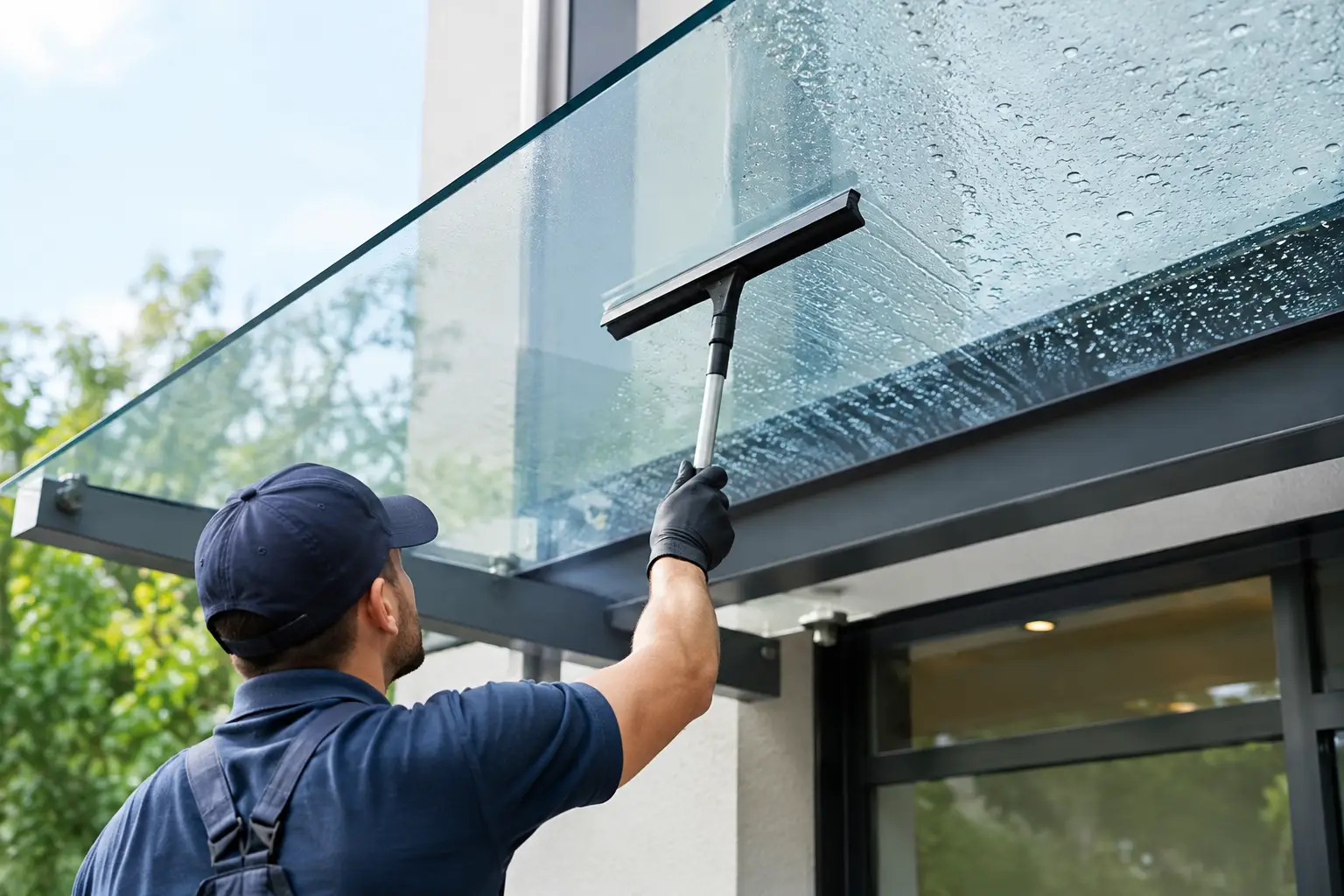
Routine cleaning usually requires clean water, a soft applicator, and a coating-safe glass cleaner when needed. The objective is to lift contamination from the surface without grinding particles into the glass. Drying with clean microfiber towels or a nonabrasive squeegee can reduce the mineral residue left by remaining droplets.
Avoid abrasive pads, harsh scouring powders, steel wool, and highly aggressive chemicals unless they have been specifically approved for the surface and the coating. These methods may appear to solve a stubborn stain in the moment, but they can scratch glass, dull its appearance, or reduce the benefits of the protective treatment. For elevated or difficult-access canopies, ensure cleaning crews have the right equipment and documented procedures before the property is handed over.
Cleaning frequency depends on exposure. A protected canopy at a low-traffic residential entry may only need periodic attention. Glass at an urban transit hub, coastal property, industrial facility, or heavily landscaped commercial site may require more frequent inspections. The goal is to clean before deposits become bonded or etched, not after the surface has visibly deteriorated.
Restore Existing Stains Before They Become Permanent
Not every water stain is the same. Light surface residue may respond to a suitable professional glass cleaner. Heavier mineral buildup can require a dedicated restoration process. If stains remain after normal cleaning, resist the temptation to increase abrasion immediately. Determine whether the issue is a removable deposit, a coating-related concern, or actual glass etching.
Etching is the costly threshold. Once mineral deposits and environmental contaminants have altered the glass surface, restoration can involve specialized products, polishing, or panel replacement. This is why early intervention matters. A regular inspection program gives facility teams an opportunity to identify drainage failures, irrigation overspray, or new runoff patterns before the visual damage spreads across multiple panels.
For fabricators and glazing contractors, this creates a useful client conversation. Deliver the canopy with clear care instructions, a defined maintenance recommendation, and a point of contact for restoration or aftercare questions. That protects the finished installation and positions the glazing provider as a long-term performance partner rather than a one-time installer.
Specify Performance, Not Just Appearance
A canopy specification should address more than glass thickness, structural loading, and hardware finish. It should also define how the glass will maintain clarity in its actual environment. Where visual performance is central to the design, consider including surface protection requirements, approved cleaning methods, drainage coordination, and post-installation care responsibilities.
For project teams, this approach reduces ambiguity between the architect, glass supplier, installer, and owner. For fabricators, it creates a stronger value proposition: protected glass paired with an aftercare story that helps preserve the project long after installation. For owners, it translates into fewer labor-intensive cleanings, a more consistent appearance, and less risk of premature glass replacement.
The most effective time to protect a glass canopy is before its first cycle of rain, runoff, and hard-water exposure. Build protection into the glass package, verify that water has a controlled route off the structure, and give the owner a practical plan for keeping the surface clear. That is how a canopy continues to make the intended architectural statement years after opening day.