
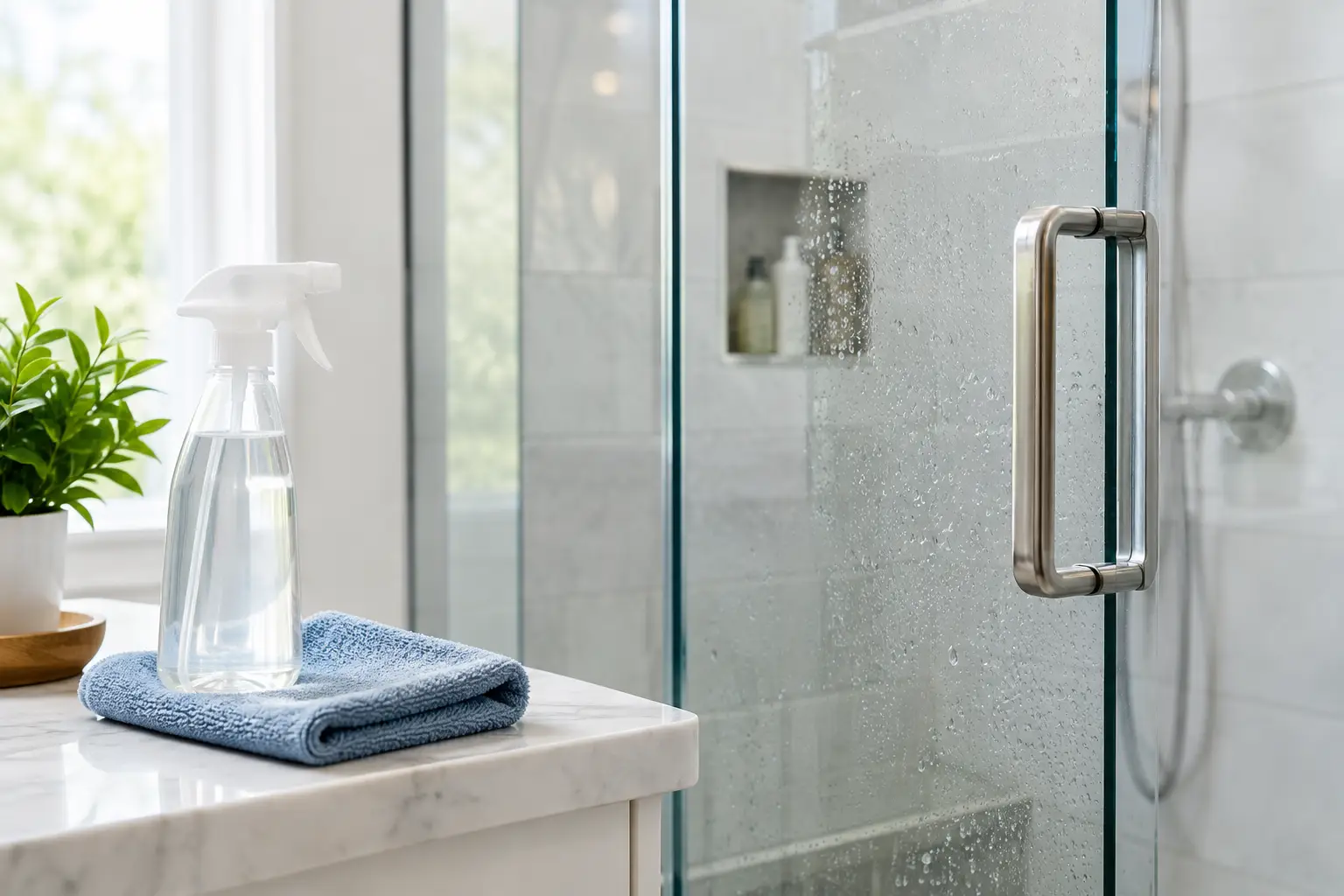
A shower door can look permanently stained long before the glass itself is damaged. Hard-water minerals dry into visible spots, soap residue builds a cloudy film, and abrasive cleaning gradually dulls the surface. The best shower door protectants address the cause: they change how water and contaminants interact with the glass, making the enclosure easier to maintain and helping it retain a clean, finished appearance.
For homeowners, that means less time fighting spots after every shower. For shower-door manufacturers, glass fabricators, and glazing professionals, it creates a stronger product offering with a credible maintenance story. The right choice depends on the glass condition, water quality, application method, expected service life, and whether the goal is a short-term improvement or durable surface protection.
What Shower Door Protectants Actually Do
Shower glass is a silica-based surface with microscopic variations that can hold moisture, minerals, and soap residue. When water evaporates, it leaves behind what it carried. Over time, those deposits become more difficult to remove, especially in areas with hard water.
A quality protectant creates a water-repellent, or hydrophobic, surface. Water beads and sheets away more readily instead of lingering across the glass. That reduced contact helps limit mineral buildup and makes routine cleaning faster. It does not make a shower door self-cleaning, and it cannot prevent all residue in a high-mineral environment. It does, however, reduce the effort required to keep glass clear.
The distinction matters commercially. A product that merely adds temporary slickness may improve appearance for a few weeks. A professionally applied coating engineered to bond with glass is designed to provide a more durable maintenance advantage. The performance claim should always match the chemistry, application process, and aftercare requirements behind it.
Best Shower Door Protectants by Protection Type
There is no single category that fits every project. The best shower door protectants are the ones aligned with the installation, customer expectation, and maintenance program.
Consumer spray protectants
Spray-on water repellents are widely available and easy to apply. They are useful for homeowners who want an immediate improvement on a clean, lightly used shower door, or for rental properties where a simple maintenance step is the priority.
Their trade-off is durability. Most spray products sit on the surface rather than becoming a long-term part of it. Frequent exposure to hot water, cleaners, and physical wiping can reduce performance quickly. Reapplication is expected, and inconsistent preparation often leads to uneven results.
These products can be a reasonable aftercare option, but they are rarely the best standalone answer for premium enclosures, high-use hospitality settings, or projects where the seller wants to differentiate on long-term maintenance value.
Wipe-on sealants and DIY coating kits
Wipe-on protectants generally offer stronger performance than basic sprays because they are intended to form a more substantial protective layer. Some may be suitable for a homeowner who is willing to follow surface-preparation instructions carefully and maintain the coating with compatible products.
Results can vary substantially. Residual soap scum, oils, silicone, or mineral deposits can interfere with adhesion. Application conditions also matter. A coating applied over imperfectly cleaned glass may lock in haze rather than restore clarity. DIY products may help, but they require realistic expectations about service life and upkeep.
Professional glass coatings
Professional-grade protective coatings are designed for applications where durability, consistency, and measurable maintenance benefits matter. These systems are commonly applied at the factory or by trained professionals after proper surface preparation. The best options use chemistry engineered for silica-based surfaces and pair the coating with approved restoration and aftercare products.
Diamon-Fusion® is one example of a patented hydrophobic coating platform designed to protect glass by helping repel water and reduce the attachment of mineral deposits and soap scum. For fabricators and shower-door providers, a system approach can also support warranty programs, dealer training, and a clear customer-care process after installation.
Professional coatings cost more upfront than a spray bottle, but the value calculation is different. On a high-end frameless enclosure, a hotel renovation, or a multifamily project, reduced service calls and preserved visual quality can justify the investment.
How to Evaluate a Shower Door Protectant
Product labels often promise easier cleaning, but the most useful evaluation starts with performance questions. Ask how the product bonds to glass, whether it is appropriate for new or existing glass, and what cleaning products the end user must avoid. A protectant should come with clear guidance, not vague claims of permanent protection.
Durability should be evaluated in context. Water hardness, shower frequency, cleaning habits, and ventilation all influence results. A lightly used guest bath and a busy family shower do not create the same exposure. Likewise, a coastal hospitality project may face different maintenance demands than a suburban residential installation.
For professional buyers, process control is as important as product chemistry. Factory application can provide repeatability at production scale, while onsite application may be the practical route for installed glass. In either case, look for a supplier that can support surface preparation, application procedures, quality assurance, aftercare, and warranty expectations.
The strongest programs also help the installer explain what customers should do after installation. That includes using non-abrasive tools, avoiding harsh or incompatible cleaners, and removing water regularly. A coating improves cleanability, but maintenance habits still determine how pristine the glass looks year after year.
New Glass Versus Existing Shower Doors
New shower glass is the ideal time to apply a protectant. The surface is clean, accessible, and free from established mineral deposits. Integrating protection before installation also gives manufacturers and dealers an opportunity to offer a tangible upgrade rather than treating maintenance as an afterthought.
Existing glass can often be protected, but restoration should come first. If the door already has white spotting, haze, etched areas, or heavy soap buildup, applying a protectant directly over those conditions will not reverse them. The surface must be evaluated, cleaned, and, where possible, restored before protection is added.
This is where a full system has an advantage. Restoration products can address surface contamination, while a protective coating helps preserve the improved finish. Treating those as separate steps prevents a common disappointment: expecting a protectant to function as a stain remover.
The Maintenance Practices That Protect Performance
Even the most capable coating performs better when paired with straightforward care. A squeegee or soft microfiber cloth after use limits the amount of water that dries on the glass. In hard-water regions, that small routine can significantly reduce the visible mineral residue that accumulates between cleanings.
Use a mild, coating-compatible cleaner instead of abrasive powders, aggressive acids, scouring pads, or razor blades. These tools may remove residue in the moment, but they can scratch glass, degrade certain protective treatments, and create a cycle of increasingly difficult cleaning.
For property managers and commercial operators, standardized aftercare instructions are worth providing at handoff. Clear guidance protects the appearance of the installation and helps reduce avoidable complaints. It also gives maintenance teams a repeatable process rather than leaving them to test cleaners on an expensive glass enclosure.
When a Protectant Is Worth the Investment
A protectant delivers the greatest return where appearance and labor both matter. Frameless shower doors, luxury residential bathrooms, model units, senior living facilities, hotels, and fitness centers are common examples. In these settings, cloudy glass can make an otherwise well-maintained space look neglected, while repeated deep cleaning consumes labor and can shorten the visual life of the enclosure.
For fabricators and dealers, protection can also create a better customer conversation. Instead of selling glass as a finished commodity, they can offer a lower-maintenance surface solution supported by correct application and care. That differentiation is especially valuable when buyers are comparing similar-looking shower enclosures on price alone.
Choose a protectant based on the level of protection the project genuinely needs, then give the glass the care that allows it to perform. A clear shower door is not maintained by chemistry alone – it is the result of good surface preparation, the right protective system, and a simple routine carried out consistently.