
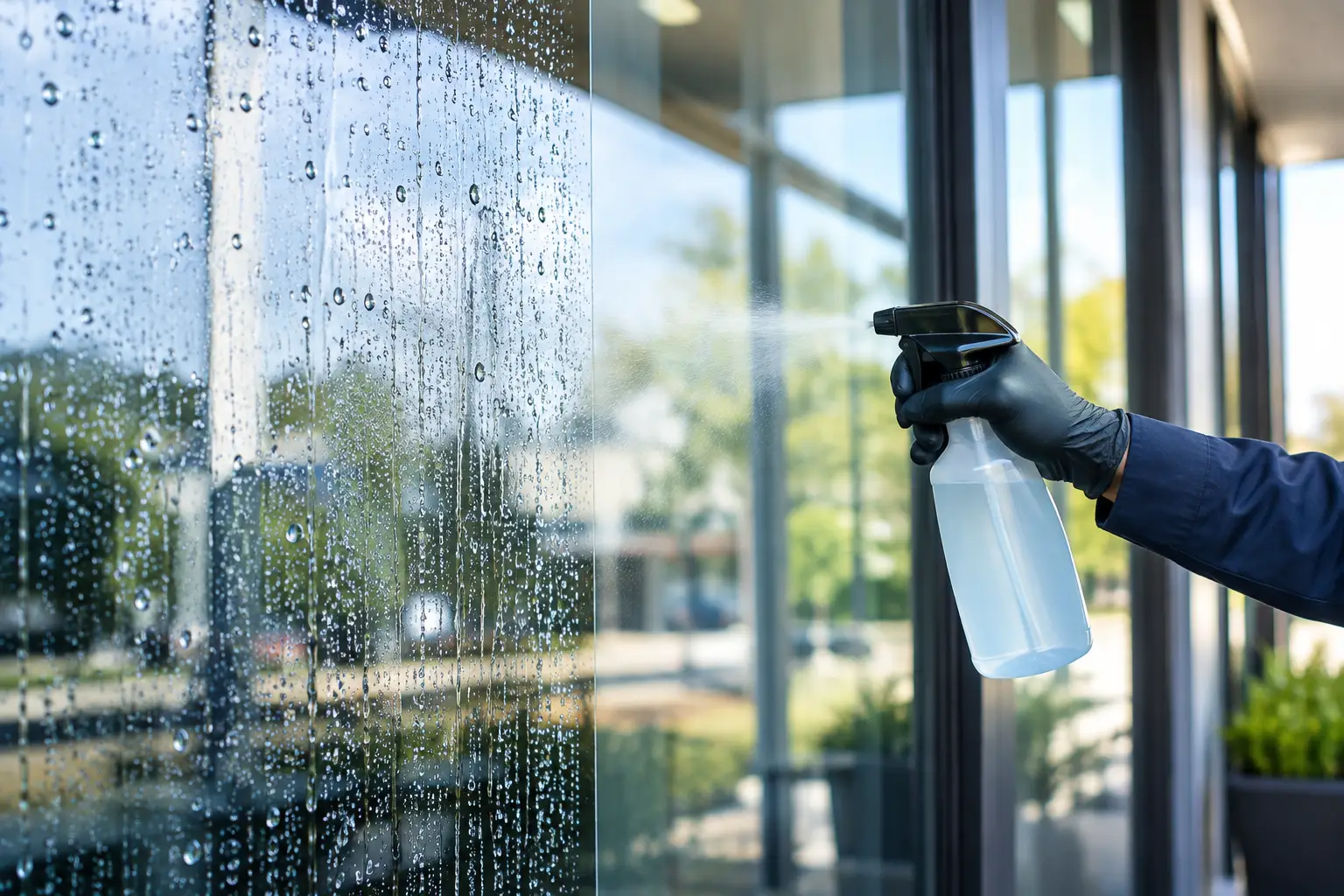
A storefront window is not just glass. It is the first surface customers see when they approach a retail space, restaurant, hotel, showroom, or office. A hydrophobic coating for storefront windows helps that surface resist the water, dirt, and mineral deposits that can quickly make an otherwise well-maintained property look neglected.
For commercial property teams, glaziers, and glass fabricators, the value is practical. Cleaner-looking glass supports curb appeal, reduces routine cleaning effort, and helps preserve visibility through entrances and display windows. The right coating program can also give glass professionals a differentiated offering with a clear maintenance story for building owners.
Why Storefront Glass Loses Its Clean Appearance
Exterior storefront glass is exposed to more than rain. Irrigation overspray, hard-water runoff, airborne dust, road film, salt, pollen, construction debris, and cleaning residues all accumulate on the surface. In high-traffic locations, fingerprints and handprints add another daily challenge around doors and sidelites.
Water is often the central problem. When water sheets across untreated glass and dries, dissolved minerals can remain behind as visible spots or haze. Over time, those deposits may become more difficult to remove, especially when they are repeatedly baked onto the glass by sun exposure. Aggressive cleaning methods may restore the appearance temporarily, but they can increase labor costs and, when used improperly, create avoidable risk to frames, seals, and surrounding finishes.
This is why a storefront maintenance plan should focus on more than the next cleaning cycle. It should consider how the glass behaves between cleanings.
How a Hydrophobic Coating for Storefront Windows Works
A hydrophobic protective coating changes the surface behavior of silica-based glass. Rather than allowing water to spread broadly across the pane, a treated surface encourages water to bead and release more readily. This can reduce the time water remains on the glass and limit the opportunity for mineral-heavy droplets to dry in place.
The effect is not a substitute for cleaning. Storefront glass still encounters pollutants, oils, and physical contact, and every commercial environment has different exposure levels. But when contaminants have less opportunity to bond stubbornly to the surface, routine cleaning can be faster and less demanding.
Advanced hydrophobic technologies are designed to form a protective layer at the glass surface rather than simply leaving behind a temporary topical film. That distinction matters in commercial applications. A coating intended for storefront use should be selected for durability, optical clarity, compatibility with the glass system, and a maintenance process that the property team can realistically follow.
The most visible benefit is often water behavior after rain or washing. The more meaningful operational benefit is that mineral spotting, soil buildup, and routine maintenance can become easier to manage over the life of the glass.
Where Storefront Coatings Deliver the Most Value
The strongest case for coated storefront glass is not limited to one building type. It depends on exposure, appearance standards, and cleaning frequency.
Retail storefronts and automotive showrooms benefit because the glass is part of the sales environment. Customers are meant to look through it, not at streaks, rain spots, and irrigation residue. In hospitality settings, entrance glass and street-facing windows influence a guest’s impression before they reach the front desk. Corporate campuses and medical offices may prioritize a polished exterior while seeking to control janitorial labor across large glazed elevations.
Coatings can be especially valuable where hard water is common or sprinkler systems regularly reach the glass. They are also useful on glass near drive lanes, sidewalks, and busy streets, where dust and traffic film increase the cleaning burden. In coastal areas, a maintenance strategy may need to account for salt-laden air and more frequent washing. In each case, the coating does not eliminate environmental exposure. It helps the glass recover more easily from it.
For glazing contractors and fabricators, this creates a practical specification conversation. Instead of presenting protective glass treatment as an add-on with vague claims, they can connect it to the project owner’s stated concern: preserving appearance, reducing maintenance pressure, or differentiating a premium storefront system.
Performance Depends on Preparation and Application
Hydrophobic performance starts with the condition of the glass. A coating should not be applied over embedded mineral stains, paint overspray, silicone residue, or construction contamination and expected to solve the underlying problem. Surface restoration and preparation are often necessary before treatment, particularly on renovation projects or glass that has been exposed during construction.
Proper application also requires consistency. On a large commercial project, that means controlling surface preparation, coating coverage, curing requirements, and quality checks. Factory-applied and onsite-applied programs can each make sense, depending on the project schedule, glazing workflow, glass handling requirements, and available equipment.
For operations that want repeatable results at scale, machinery-supported application can improve process control and production efficiency. Diamon-Fusion International supports this full-system approach with patented coating technology, application machinery, restoration products, and aftercare solutions designed for silica-based surfaces.
The application method should match the job. A fabricator supplying recurring storefront packages may value an integrated production process. A glazing contractor working on existing commercial glass may need an onsite solution that accounts for access, weather conditions, and surface condition. The common requirement is disciplined preparation, not simply applying more product.
Set Realistic Expectations for Cleaning and Durability
A hydrophobic coating is a maintenance-reduction tool, not a promise that glass will never show dirt or water spots. A storefront beneath active sprinklers, near a construction site, or on a heavily traveled urban corridor will still need regular care. The difference is that treated glass can require less effort to return to a clear, polished appearance.
Cleaning practices matter. Abrasive pads, harsh chemicals, and unapproved cleaners can work against the performance of both the coating and the glass system. Property teams should use compatible cleaning products and soft, non-abrasive tools, then follow the aftercare guidance associated with the coating system. This protects the investment and gives facility staff a consistent process instead of a different approach at every location.
Durability also depends on exposure and usage. Glass under a covered entry will face a different service environment than a west-facing storefront subject to direct sun, wind-driven rain, and irrigation overspray. Door glass may experience more hand contact than fixed sidelites. A credible coating program should account for these realities, define maintenance expectations, and provide a warranty structure where appropriate.
Build Coated Glass Into the Commercial Scope Early
The best time to evaluate protective coating is before the storefront glass is fabricated or installed. Early planning allows architects, owners, fabricators, and glazing contractors to align on the intended appearance, application location, quality-control needs, and post-installation maintenance responsibility.
For new construction, include the coating requirement in the glass schedule or performance specification rather than treating it as a late-stage upgrade. This helps prevent confusion over which panes are treated, whether treatment occurs before or after installation, and how the glass should be protected during construction. It also makes it easier to present the owner with a complete maintenance plan at closeout.
For existing buildings, begin with an assessment of the glass condition and the source of staining. If irrigation is hitting the windows every morning, correcting the sprinkler pattern may be as valuable as applying a coating. If mineral deposits are already etched or bonded to the surface, restoration should be addressed before protection. The most effective solution is usually a combination of source control, restoration, protective treatment, and proper aftercare.
A Better Storefront Standard
Clear storefront glass signals attention to detail, but maintaining it should not require disproportionate labor every week. A professionally selected hydrophobic coating can help commercial teams protect that standard while giving fabricators and glaziers a stronger, performance-led glass offering.
The practical next step is to evaluate the glass environment before choosing a coating: identify water sources, document existing staining, define cleaning frequency, and determine whether factory or onsite application best fits the project. When protection is matched to real site conditions, storefront glass can stay easier to clean and ready to represent the business behind it.