
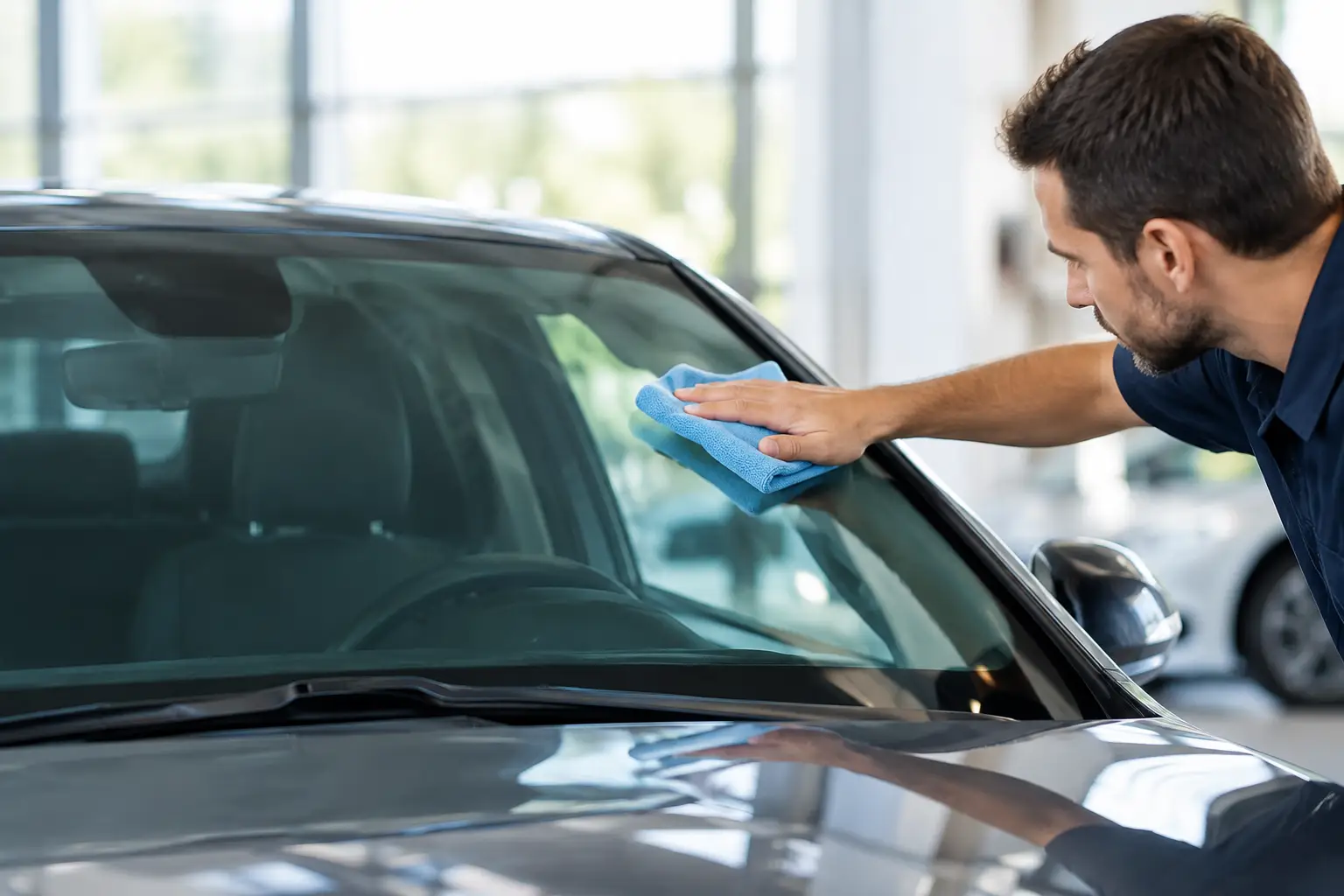
A clear windshield can change how a driver experiences a vehicle before they ever leave the lot. Rain beads differently, road film is easier to remove, and the glass looks cleaner during delivery. That is the business case behind a car dealership glass protection package: not a cosmetic add-on for its own sake, but a practical way to improve visibility, support vehicle presentation, and create a credible profit opportunity in F&I and aftermarket sales.
For a package to earn its place on the menu, however, it must deliver more than a quick shine. Dealerships need a treatment with dependable performance, a clear application process, an honest maintenance story, and value that customers can understand without exaggerated promises.
What a Car Dealership Glass Protection Package Should Include
A well-designed glass protection package centers on the windshield, where water repellency and visual clarity have the most immediate value. It may also extend to side glass, rear glass, mirrors, panoramic roofs, and other silica-based surfaces, depending on the dealership’s vehicle mix and delivery process.
The core product should be a hydrophobic glass coating engineered to bond with the surface rather than sit on top like a temporary dressing. Hydrophobic performance causes water to bead and move off the glass more readily, which can help reduce rainwater buildup and make routine cleaning less labor-intensive. A treated windshield can also be easier to maintain when insects, road film, mineral deposits, and other contaminants have less opportunity to adhere.
The package should define what the customer receives. That includes the treated surfaces, preparation requirements, expected care instructions, warranty terms when available, and the recommended aftercare products. Clear scope protects the dealership as much as it supports the customer experience.
Preparation Determines Performance
Glass coating performance begins before the bottle is opened. Windshields can carry embedded contamination, mineral spotting, silicone residue, traffic film, and residues from prior detailing products. Applying a protective coating over those issues may compromise clarity or reduce the quality of the bond.
A consistent process includes inspection, cleaning, restoration when needed, controlled application, and final quality checks. For dealerships processing high vehicle volume, repeatability matters. The most attractive package on paper becomes a liability if application quality varies from one delivery coordinator or detail technician to another.
Why Dealerships Add Glass Protection to Their Menu
Vehicle buyers increasingly recognize protection products because they are familiar with paint protection, interior protection, and maintenance plans. Glass protection gives dealerships a focused, easy-to-demonstrate offering that addresses a real ownership concern: keeping the windshield and other glass surfaces easier to clean and clearer in wet conditions.
The sales conversation is straightforward. Instead of leading with chemistry, start with outcomes. The treatment can help repel water, reduce the buildup of hard-water spots and road grime, and lessen the effort required to clean exterior glass. For drivers in rainy regions, commuters, rideshare operators, and customers who park outdoors, those benefits can feel immediately relevant.
From an operational perspective, glass protection can strengthen delivery presentation. A properly treated vehicle leaves the lot with clean, uniform glass and a documented maintenance recommendation. It also creates an opportunity for a dealership to build a longer-term aftercare relationship instead of treating delivery as the end of the customer connection.
The Margin Depends on Process Discipline
A car dealership glass protection package is often appealing because the material cost can be manageable relative to its retail value. Still, margin is not simply the difference between product cost and selling price. Labor time, rework, technician training, quality control, packaging, claims administration, and customer education all affect profitability.
The strongest programs are integrated into the reconditioning or delivery workflow instead of being treated as an interruption. If technicians must stop, locate supplies, and improvise the process for every vehicle, labor costs and inconsistency can erode the return. A standardized workstation, documented steps, approved application tools, and assigned responsibility can make the program more efficient.
Dealership groups should also consider whether they need an in-house application program, a detail partner, or an equipment-supported coating system. The right choice depends on volume, available labor, facility layout, and the level of control the dealership wants over quality and timing.
How to Sell Protection Without Overpromising
Glass coatings are not windshield repair products. They do not prevent rock chips, stop cracks, remove deep scratches, or eliminate the need for wiper blades and washer fluid. A credible sales process makes those limits clear.
Customers should understand that coating performance can vary with driving speed, rainfall intensity, wiper condition, surface contamination, climate, and maintenance habits. Water beading may be more noticeable at highway speeds, for example, while urban drivers may still rely heavily on wipers. This is not a weakness in the package. It is accurate product education, and it reduces the risk of avoidable dissatisfaction.
The most effective presentation connects the package to ownership convenience. A product adviser can explain that the coating helps water release from the glass, helps make cleaning easier, and supports a cleaner-looking windshield between washes. That message is useful, specific, and less likely to create unrealistic expectations.
Selecting the Right Glass Coating Partner
Not all water-repellent products are built for a dealership environment. Some are short-term treatments designed for quick retail application. Others are engineered for more durable protection and supported by training, restoration products, maintenance solutions, warranty programs, and application technology.
When evaluating a supplier, dealerships should look beyond a single performance claim. Ask how the coating interacts with silica-based surfaces, what preparation is required, how long the application takes, and how technicians verify a proper result. Review the maintenance system as well. A protection package works best when customers receive simple, compatible care guidance rather than being left to use any cleaner or abrasive tool available.
Support also matters at scale. Diamon-Fusion International provides a full-system approach that combines patented hydrophobic coating technology with application equipment, restoration products, maintenance solutions, and dealer support. For dealerships, that type of infrastructure can reduce the gap between selling a protection package and delivering one consistently.
Warranty Language Needs to Be Specific
If a dealership offers a warranty, its terms should be easy to explain and easy to administer. Define covered surfaces, coverage duration, exclusions, maintenance requirements, documentation expectations, and the process for handling a customer concern.
Avoid vague phrases such as “lifetime protection” unless the warranty language fully supports that statement. A clear, limited warranty with defined benefits is more valuable than a broad claim that creates uncertainty for customers and staff.
Building a Better Customer Experience After Delivery
The package should not end with a line item on the buyer’s order. A simple post-delivery handoff makes the product more tangible. Provide care instructions that explain which cleaners to use, why abrasive pads should be avoided, and how to address water spots before they become difficult deposits.
This is also an opening for service-lane engagement. During routine maintenance visits, advisors can ask whether the customer has noticed spotting, film, or reduced water repellency. That conversation may lead to a cleaning service, surface restoration, maintenance-product sale, or renewed protection service where appropriate.
For used-car departments, glass protection can be especially useful as part of the recon story. Clean, well-presented glass improves first impressions in photos, on the lot, and during test drives. The treatment should never substitute for repairing unsafe or damaged glass, but it can help a properly reconditioned vehicle look more cared for.
Make the Package Easy to Believe
The best dealership glass programs do not rely on fear-based selling or complicated technical language. They show the customer a clean windshield, explain the maintenance benefit, and set practical expectations about performance. That approach supports trust, repeat business, and stronger protection-product margins.
A glass protection package is worth offering when the coating technology, application process, warranty, and aftercare all support the promise made at delivery. Start with a controlled pilot, measure application time and customer acceptance, then refine the program around the vehicles and drivers your dealership serves.