
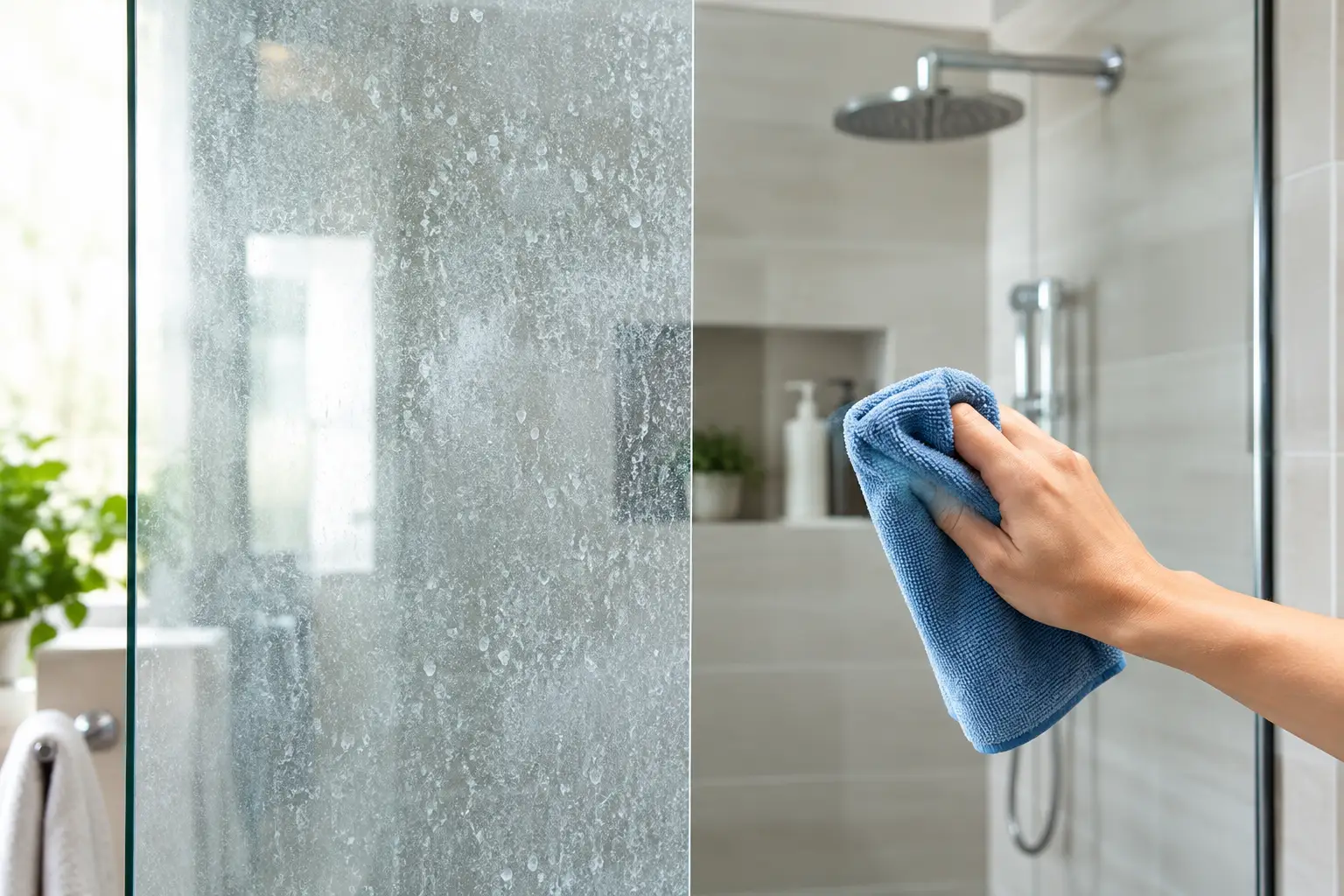
A spotless shower enclosure can lose its appeal quickly when water dries on the glass. To prevent hard water spots on shower glass, the priority is not aggressive scrubbing after deposits appear. It is controlling what happens in the minutes after every shower, then protecting the surface so minerals and soap residue have less opportunity to adhere.
Hard water is common in residential and commercial settings alike, and its effect on glass is cumulative. For homeowners, it creates a persistent cleaning chore. For shower-door fabricators, dealers, builders, and property managers, it can lead to avoidable service calls, dissatisfied clients, and a product that looks aged well before its time.
Why Hard Water Spots Form on Shower Glass
Water itself does not stain glass. The issue begins when droplets contain dissolved minerals, commonly calcium and magnesium. As water evaporates, those minerals remain on the surface. Add body oils, soap ingredients, and airborne bathroom residue, and the result is a cloudy film that can become increasingly difficult to remove.
Untreated glass also has microscopic surface texture. Minerals and soap scum can settle into those irregularities, making the glass appear dull even after routine cleaning. Repeated exposure creates layered buildup, especially around the lower portion of a shower enclosure where water regularly collects and dries.
There is an important distinction between removable deposits and permanent damage. Fresh mineral residue can usually be cleaned away. If deposits remain for long periods, however, they may contribute to surface etching or staining that ordinary household cleaners cannot correct. Prevention is less labor-intensive, less costly, and more reliable than restoration.
How to Prevent Hard Water Spots on Shower Glass
The most effective strategy combines moisture control, compatible cleaning, and a durable protective surface treatment. No single step replaces the others. A high-quality coating can reduce cleaning time and mineral adhesion, but it still performs best with proper aftercare. A daily squeegee helps considerably, but it cannot fully compensate for a surface that has already accumulated residue.
Remove Water Before It Dries
A squeegee is one of the simplest tools for maintaining shower glass. After showering, make a few deliberate passes from top to bottom, directing water toward the drain. Follow the edges, hardware, and lower corners where droplets tend to remain.
This practice matters because it removes the carrier for mineral deposits before evaporation begins. It is particularly valuable in homes with hard municipal water or private well water. In high-use bathrooms, such as shared residential units, hospitality properties, and fitness facilities, the routine may need to be built into housekeeping procedures rather than left to chance.
Ventilation also supports better results. Run the exhaust fan during and after use, and leave the shower door or enclosure open when practical to improve drying. Better airflow will not remove minerals, but it reduces the amount of time water sits on the glass.
Use Cleaners That Do Not Leave Their Own Film
Many shower-cleaning problems are made worse by the wrong product or tool. Abrasive powders, harsh scouring pads, and aggressive steel wool can scratch glass or damage surrounding hardware. Heavy soaps and oily cleaners may leave a residue that attracts additional soil.
Use a cleaner designed for glass and shower surfaces, then rinse thoroughly so cleaning chemistry does not dry onto the panel. A soft microfiber cloth is generally the right finishing tool because it lifts residue without creating unnecessary abrasion. The goal is a clean, residue-free surface, not simply a surface that feels slick after cleaning.
For established hard water deposits, avoid assuming that stronger is always better. Acidic cleaners may help with mineral buildup, but they require careful use around metal finishes, natural stone, grout, and sealants. Always follow the product directions and test a small, inconspicuous area first. When buildup is severe or the glass has visible etching, professional restoration may be the more appropriate path.
Protect the Glass Before Buildup Starts
A hydrophobic protective coating changes how water interacts with glass. Rather than spreading broadly across the surface, water is encouraged to bead and shed more readily. This can reduce mineral staining and soap-scum adhesion while making routine cleaning faster.
For shower-door manufacturers and glass professionals, protection is also a product-differentiation opportunity. A treated enclosure offers an easier maintenance story at the point of sale, supports a more premium installation, and can reduce the likelihood that a customer mistakes water spotting for a glass-quality issue. The strongest programs pair the coating with clear aftercare guidance, so end users understand both the benefit and the simple habits that preserve appearance.
Diamon-Fusion is a patented hydrophobic coating technology engineered for glass and other silica-based surfaces. Applied as part of a complete surface-protection and maintenance approach, it helps reduce the effort required to keep shower glass clear while supporting long-term visual performance.
Start With Clean Glass, Not Hidden Residue
A coating should be applied to properly prepared glass. Applying protection over soap scum, mineral deposits, fingerprints, or fabrication residue can compromise appearance and performance. This is why surface preparation is as important as the coating itself.
For new installations, protect the glass before the bathroom enters regular use. Construction dust, grout haze, and overspray should be addressed before final handoff. For existing enclosures, inspect the glass under direct light. A hazy appearance that remains after normal cleaning may indicate bonded deposits or early-stage surface damage that should be restored before protective treatment is considered.
This principle is particularly relevant for commercial projects. A maintenance plan that begins at installation preserves the intended finish and avoids the expense of repeated corrective cleaning later. Architects, specifiers, and glazing professionals should account for the ownership phase of the glass, not only its appearance on installation day.
Avoid the Habits That Make Spots Worse
Leaving bottles, washcloths, or accessories against shower glass creates areas where water remains trapped. These small contact points often become the first locations for stubborn marks. Move items to shelves or caddies that allow the glass to dry freely.
Do not rely on a weekly deep clean as the only maintenance plan. Once hard water residue has dried repeatedly, each cleaning cycle becomes more demanding. A 30-second post-shower routine is usually more effective than a long, aggressive scrub at the end of the week.
Water-softening systems can also help where mineral levels are exceptionally high, but they are not always necessary or practical. They involve an upfront investment, ongoing salt or service requirements, and they treat the entire water supply rather than the shower glass alone. For many properties, surface protection and disciplined maintenance offer a more targeted solution.
Set Realistic Expectations for Coated Shower Glass
Protective coatings reduce the tendency for water and contaminants to bond to glass, but they do not make a shower enclosure maintenance-free. Water still contains minerals. Soap is still used. The difference is that residue is generally easier to remove before it becomes a visible, persistent problem.
Performance will vary based on water hardness, cleaning products, shower frequency, ventilation, and whether users follow simple drying practices. In a lightly used guest bath, a treated surface may need little attention between regular cleanings. In a busy family bathroom or commercial facility, it will still benefit from frequent squeegeeing and scheduled maintenance.
Clear expectations protect everyone involved. Homeowners receive a more practical care routine, while glass professionals can confidently explain that durable surface protection reduces labor and helps preserve appearance rather than promising an unrealistic never-clean claim.
The best time to protect shower glass is before water spots become the focus. Make daily drying easy, keep cleaning chemistry compatible with the surface, and specify protection as part of the enclosure rather than as an afterthought. That approach keeps glass clearer for longer and gives every shower installation a stronger long-term value story.