
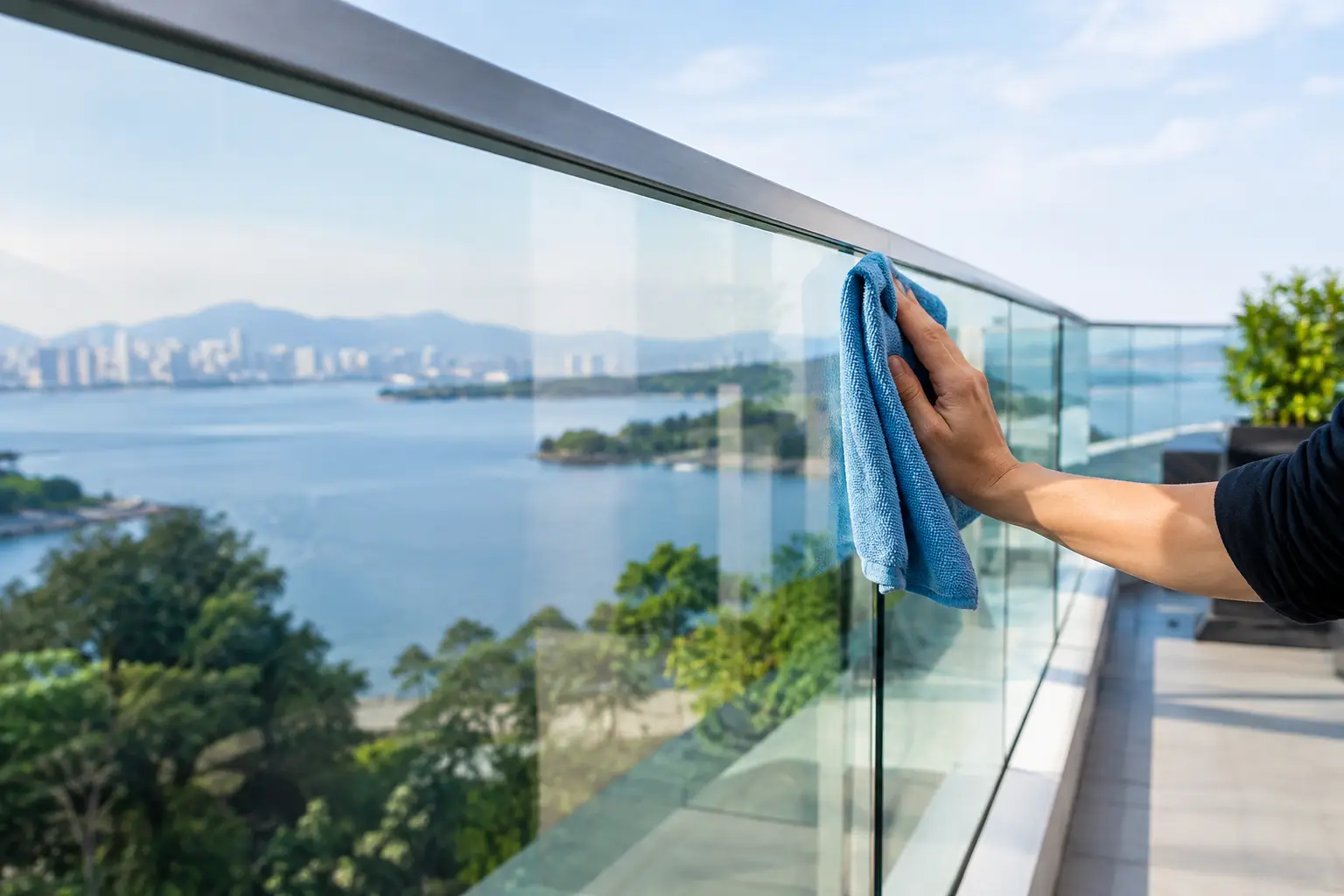
A glass railing should frame the view, not become the surface everyone notices for the wrong reason. A properly selected glass railing coating helps keep guardrail glass clearer by repelling water, limiting mineral deposits, and reducing the effort required to remove everyday grime. For fabricators, glazing contractors, and property teams, that translates into a more durable finished installation and a stronger maintenance story for the end user.
The need is especially clear on balconies, stairways, pool decks, terraces, and exterior amenity spaces. These surfaces are regularly exposed to rain, irrigation overspray, hard water, airborne contaminants, handprints, salt, and cleaning residues. Untreated glass can quickly lose the crisp, transparent appearance specified by architects and valued by owners.
Why Glass Railing Surfaces Lose Their Clarity
Glass is smooth, but it is not maintenance-free. Microscopic surface irregularities allow water and contaminants to spread, cling, and dry on the panel. When hard water evaporates, dissolved minerals remain behind. Over time, these deposits can develop into visible spotting or staining that requires more aggressive cleaning to remove.
Exterior railings face a different contamination profile than shower glass, but the mechanism is familiar. Rainwater carries pollutants. Nearby landscaping can leave pollen, soil, and irrigation minerals. Oceanfront properties add salt spray. Around pools, splash-out and chemical residues can accumulate. On high-traffic stair or terrace railings, oils from hands and fingerprints reduce visual clarity between scheduled cleanings.
The result is not simply an appearance issue. A railing system that demands frequent labor-intensive cleaning raises operating costs and can affect a property’s perceived quality. For a hospitality project, luxury multifamily development, or premium residence, cloudy or spotted glass works against the design intent.
What a Glass Railing Coating Actually Does
A high-performance protective coating is designed to modify the behavior of the glass surface. Hydrophobic technology causes water to bead and run off more readily rather than spreading across the panel. This reduces the opportunity for mineral-rich water to dry in place and makes routine contaminants easier to remove.
The best systems are engineered to bond with silica-based surfaces at the molecular level rather than acting like a temporary topical treatment. That distinction matters. A loosely adhered product may create short-term water beading but wear away quickly under weather exposure and cleaning. A professionally applied, chemically bonded coating is intended to provide lasting surface protection when paired with proper care.
Diamon-Fusion® uses patented hydrophobic technology to help protect glass and other silica-based surfaces from water spotting, soap scum, and staining. On railing glass, the practical benefit is straightforward: the surface stays easier to maintain, so teams can spend less time fighting buildup and more time preserving the intended appearance of the installation.
A coating does not make glass invulnerable. It will not prevent impact damage, eliminate scratches, repair fabrication defects, or remove existing corrosion and mineral staining. It also does not eliminate the need for cleaning. Instead, it changes the cleaning equation by helping contaminants release more easily before they become a more difficult restoration problem.
The operational value goes beyond cleaner glass
For commercial decision-makers, surface protection can support a more predictable maintenance plan. Cleaning crews may require less time and fewer harsh chemicals to maintain acceptable appearance. Facilities teams can reduce the risk of abrasive tools being used on glass when ordinary buildup becomes difficult to remove. Fabricators and glaziers can offer a differentiated upgrade that adds value without changing the visual design of the railing system.
For homeowners, the advantage is equally tangible. Less water spotting on a balcony or pool enclosure means less weekend cleaning and a clearer view from inside the home. The value is particularly strong in hard-water regions, coastal environments, and homes with landscaping irrigation near the glass.
Selecting a Glass Railing Coating by Environment
Not every railing experiences the same conditions, so coating selection and aftercare should reflect the project environment. A sheltered interior stair railing may primarily need resistance to fingerprints and easier routine cleaning. An exposed rooftop guardrail faces UV exposure, weather cycles, and airborne debris. A poolside or beachfront railing needs added attention because water chemistry, mineral content, and salt can accelerate visible buildup.
For a residential project, a professionally applied coating can be positioned as a low-maintenance upgrade that protects the homeowner’s investment. For multifamily and hospitality installations, the conversation should include cleaning frequency, labor budgets, access constraints, and the visual expectations associated with the property. A glass panel that is difficult to reach safely becomes much more expensive to clean, making easy-release performance particularly valuable.
Architects and specifiers should also consider when the coating is applied. Factory application can support repeatable processing for large glass volumes and may simplify quality control. Onsite application can be useful for installed glass or retrofit work, provided the surface is properly prepared and the application team follows the product’s process requirements. The right path depends on project scale, delivery sequence, glazing logistics, and warranty requirements.
What to Specify for Lasting Railing Performance
A coating should be evaluated as part of the full glass-protection system, not as an isolated add-on. Before approval, project teams should confirm four practical areas:
- Surface compatibility: Verify that the coating is designed for glass and appropriate for the specific silica-based substrate and surrounding materials.
- Application method: Determine whether factory, shop, or onsite application best fits the project schedule and quality-control needs.
- Environmental exposure: Account for hard water, coastal salt, pool chemicals, UV exposure, irrigation, and cleaning access.
- Aftercare and warranty support: Confirm the recommended cleaning products, maintenance expectations, documentation, and available warranty coverage.
These details are where performance claims become field results. A coating applied over contamination, silicone residue, construction dust, or existing mineral staining cannot deliver the same outcome as one applied to a properly restored and prepared surface.
Preparation and Application Determine the Result
Surface preparation is the most overlooked part of railing protection. Before coating, the glass should be inspected for fabrication debris, sealant residue, scratches, mineral deposits, and staining. Existing contamination may need to be removed with purpose-built restoration products before the protective treatment is applied.
This is particularly relevant for retrofit projects. If a railing has been exposed to sprinklers or hard water for months, a coating should not be expected to conceal the existing damage. Restoring the glass first gives the coating a clean surface on which to bond and helps preserve the visual standard the owner expects.
Application teams should also work within the coating manufacturer’s instructions for temperature, humidity, cure time, handling, and quality checks. For large-scale fabricators, proprietary application machinery can improve consistency and production efficiency. For glazing contractors, trained onsite procedures help protect both performance and the final appearance of installed panels.
Maintenance Still Matters
Coated glass is easier to clean, but it should still be maintained with non-abrasive tools and compatible products. Regular removal of loose dirt and environmental residue prevents contaminants from accumulating at panel edges, hardware interfaces, and other areas where water can linger.
Avoid treating coated railings like ordinary exterior glass that can withstand any cleaner or pad. Abrasive powders, harsh scouring tools, and unapproved chemicals can compromise surface performance or create scratches that collect dirt and moisture. Property teams should incorporate the coating’s maintenance guidance into turnover manuals and cleaning protocols rather than leaving the decision to individual cleaners.
For commercial properties, this is also a communication opportunity. A documented aftercare program gives facility managers clear instructions, supports warranty compliance, and reduces the chance that a well-protected installation is damaged by inappropriate maintenance practices.
A Better Upgrade Story for Glass Professionals
Glass railing systems compete on transparency, safety, hardware design, and installation quality. A protective coating adds another meaningful point of differentiation: long-term visual performance. It gives fabricators and glaziers a credible way to address the question that often follows project completion: how will this glass look after repeated exposure to weather, water, and daily use?
The commercial case depends on the project. A low-exposure interior railing may not justify the same coating strategy as a coastal hotel terrace or a luxury residential pool deck. But where clear views, reduced labor, and long-term appearance matter, a glass railing coating can turn a recurring maintenance issue into a specified performance benefit.
The most effective next step is to evaluate the actual site conditions before the glass reaches the field. When coating selection, surface preparation, application, and aftercare are planned together, the railing has a better chance of looking as clear on opening day as the design team intended.