
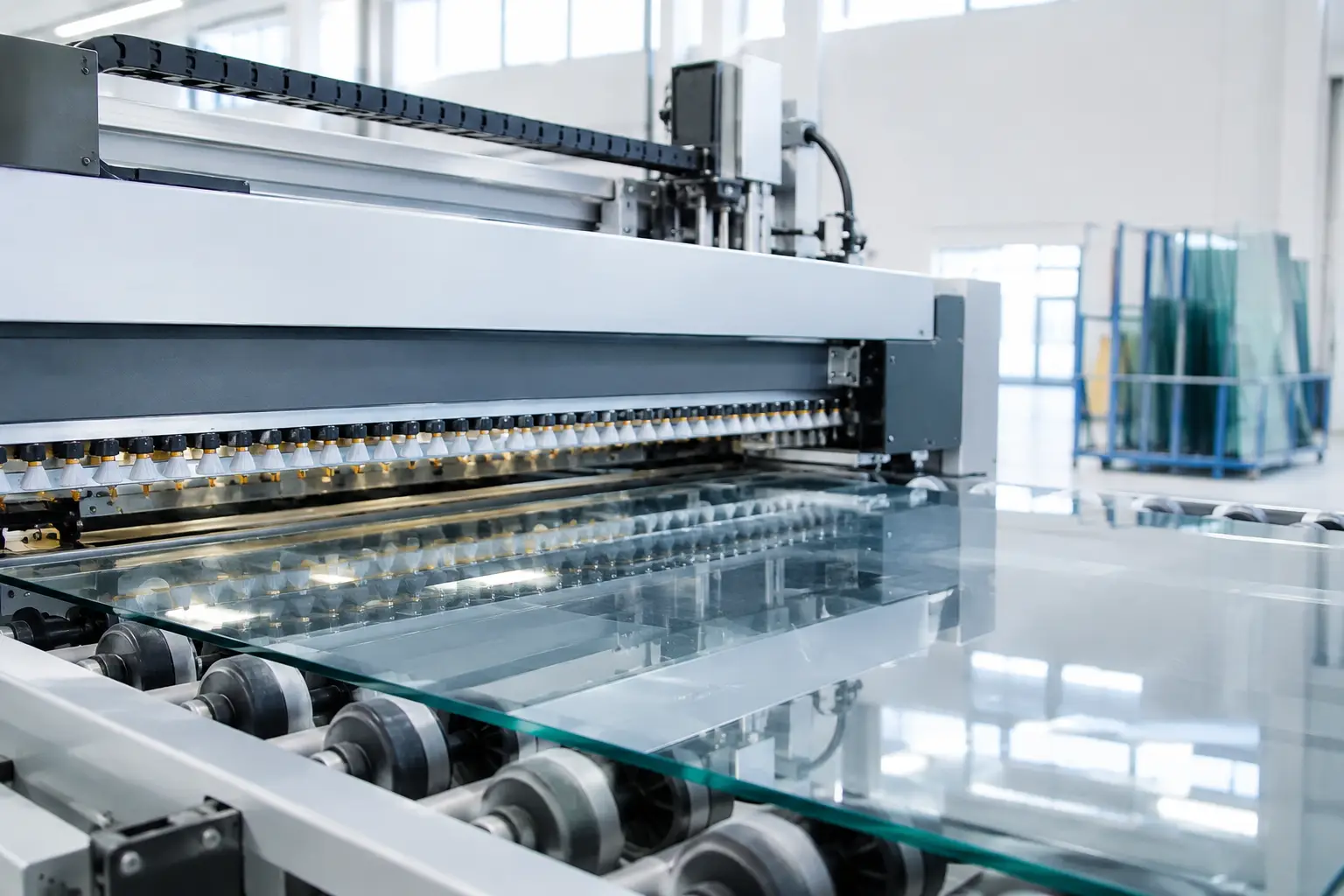
A glass coating machine is not simply an added production tool. For fabricators, shower-door manufacturers, glazing professionals, and automotive service businesses, it is a way to turn surface protection into a repeatable, revenue-producing part of the operation. When the coating, preparation process, equipment settings, and aftercare program work together, protected glass leaves the facility with a clear performance advantage: less water spotting, easier cleaning, better appearance, and a more credible long-term value proposition.
Why Coating Application Has Become a Business Decision
Untreated glass is highly susceptible to staining, mineral buildup, soap scum, and environmental contaminants. In showers, hard water can quickly create etched-looking deposits that customers associate with poor glass quality, even when the glass itself is structurally sound. On exterior architectural glass, water runoff and airborne pollutants can compromise appearance and increase maintenance demands. Windshields face a different but related challenge: rain, grime, and mineral residue can reduce visibility and make cleaning more frequent.
A hydrophobic protective coating changes the surface behavior of glass and other silica-based materials. Rather than allowing water to spread across the surface and dry into visible deposits, the treated surface repels water more effectively. That can reduce the time required to maintain the glass and help preserve a cleaner appearance between cleanings.
For a business, the opportunity is larger than the coating itself. A consistent application process lets a company offer a differentiated finished product, reduce application variability, support warranties where applicable, and create an ongoing relationship through approved maintenance products. The decision to install machinery should therefore be evaluated as a product-platform decision, not merely an equipment purchase.
What a Glass Coating Machine Must Deliver
A professional glass coating machine is designed to apply a protective coating in a controlled, repeatable manner. The most useful systems support production consistency without forcing an operation to sacrifice throughput. That balance matters because an exceptional coating formula can still underperform if it is applied unevenly, contaminated during application, or insufficiently cured.
The right system should control the practical variables that often create inconsistency in manual coating: coating delivery, coverage, timing, operator handling, and environmental exposure. It should also fit the types and sizes of glass an operation processes regularly. A shower-door manufacturer may prioritize efficient handling of panels and enclosures, while an architectural fabricator may need to consider large lites, workflow integration, and production volume.
Equipment selection also depends on the coating technology being used. Some products may be positioned as temporary water repellents, while chemically engineered coatings are intended to create more durable protection through a bond with silica-based surfaces. The machinery, surface-preparation requirements, and quality-control process need to match the performance claim being made to the customer.
Consistency Protects the Brand Promise
Customers do not judge a coated surface by the equipment behind it. They judge it by whether water spots appear, whether soap scum releases more easily, and whether the surface remains attractive over time. That makes repeatability essential.
A controlled application process reduces the chance that one panel performs differently from the next. It also helps businesses train new employees more effectively, document their process, and maintain a more predictable result across locations or shifts. For high-volume operations, this consistency can become a meaningful competitive advantage when selling to builders, dealers, hospitality projects, or homeowners who expect a premium finish.
Efficiency Is More Than Cycle Time
Fast application matters, but cycle time alone can be misleading. A process that appears quick but creates rework, inconsistent coverage, or avoidable callbacks is expensive. The more useful measure is total operational efficiency: the time spent preparing glass, applying the coating, inspecting the result, handling exceptions, and servicing the product after installation.
A well-designed machine-based process can reduce dependence on highly variable hand application while helping an operation build a disciplined quality-control routine. That may lower labor pressure, especially when experienced technicians are difficult to hire and retain. It can also help protect margins by reducing waste and keeping premium coating services scalable.
Match the System to the Application Market
The best glass coating machine for a business depends on where the protected glass will be used and how the product will be sold.
Shower Doors and Interior Glass
Shower enclosures are one of the clearest applications for protective coatings because homeowners see the maintenance burden every day. A treated shower door can resist the visible effects of hard water and soap scum, making routine cleaning easier and helping preserve the bright, transparent appearance buyers expect from premium glass.
For shower-door fabricators and dealers, this creates a practical upgrade path. The coating can be included in a premium package, specified as a standard feature for selected product lines, or sold as an option with a maintenance kit and clear care instructions. The value is strongest when the sale does not stop at installation. Customers should understand which cleaners to use, how to avoid abrasive damage, and how to maintain the protective benefit over time.
Architectural and Commercial Glazing
Commercial projects introduce broader variables: water quality, building orientation, cleaning access, local climate, and the expectations of owners and facility managers. Coated glass may help reduce the frequency and difficulty of cleaning, but it does not eliminate the need for a maintenance plan. A strong specification conversation addresses that distinction directly.
Architects and project managers also need confidence that the coating process can be documented and delivered consistently at project scale. Equipment capacity, operator training, inspection procedures, and product support all affect whether a fabricator can meet that expectation. In this market, the coating system becomes part of the fabricator’s ability to compete for higher-value work.
Automotive Glass
On windshields, hydrophobic performance is closely tied to visibility. Water that beads and moves more readily across the surface can improve driving comfort, particularly in rain. Yet automotive applications require careful expectations: coating performance can be affected by wiper condition, washer fluids, road debris, abrasion, and how frequently the vehicle is driven.
Dealerships and automotive service providers should position glass protection as a practical ownership benefit, not a substitute for safe driving practices or normal windshield maintenance. A consistent application system helps make that offering easier to integrate into detailing, vehicle delivery, and value-added protection packages.
Evaluate the Full Coating Program, Not Just the Machine
Machinery matters, but the surrounding program often determines whether a coating offering succeeds. Before investing, decision-makers should evaluate the complete operating model:
- Surface preparation and restoration products for glass affected by mineral deposits, stains, or contamination.
- The durability and intended use of the coating chemistry.
- Training and application support for operators and production teams.
- Quality-control procedures that verify correct application before shipment or installation.
- Approved aftercare products that help customers preserve performance.
- Warranty support and documentation that align with the promised protection level.
This full-system approach is especially valuable when a company is building a premium offering rather than selling a commodity add-on. Diamon-Fusion International has developed its FuseCube™ machinery and protective coating platform around that principle: coating performance, application control, restoration, maintenance, and support should reinforce one another.
Questions to Ask Before You Invest
Start with volume and workflow. How many pieces will be coated per shift, and at what point in production should coating occur? A system that fits a small custom-glass operation may not suit a fabricator moving large quantities of shower doors or architectural panels.
Next, assess the product strategy. Will the coating be standard on every unit, offered as an upgrade, or reserved for specific customer segments? Standardizing protection can strengthen brand differentiation, while an optional model may create an immediate margin opportunity. The better choice depends on sales channels, competitive positioning, and whether the customer understands the benefit before purchase.
Finally, consider serviceability. The most credible coating programs include a response for glass that is already stained, a recommended cleaning method, and a clear explanation of what the coating can and cannot do. Hydrophobic protection reduces maintenance demands; it does not make glass immune to abrasive cleaners, physical damage, or neglect.
A glass coating machine earns its place on the floor when it helps your business deliver protection customers can see, support, and recommend long after the glass is installed.