
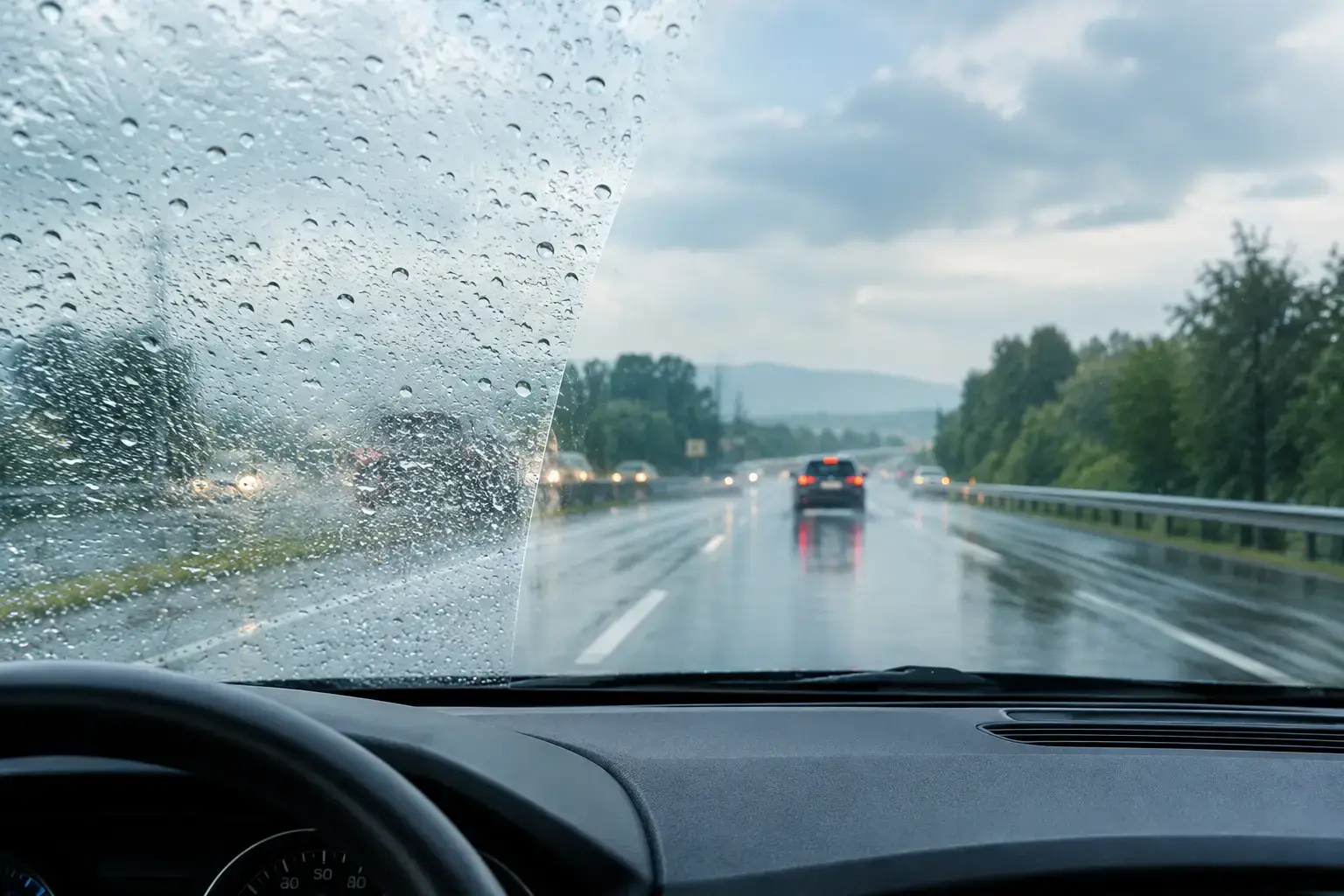
Rain does not need to be heavy to compromise a driver’s view. A thin film of water, road spray, mineral residue, and wiper smear can scatter light across the windshield, especially after dark. Windshield coatings address that problem at the surface level by changing how water interacts with automotive glass.
For vehicle owners, the benefit is easier visibility and less time spent cleaning stubborn spots. For dealerships, detail operations, and automotive service providers, a quality coating can create a premium protection offering with a clear maintenance story. The value is not simply that water beads on the glass. It is that a properly prepared and coated windshield is easier to keep clean, more resistant to mineral buildup, and better equipped to maintain a clear appearance between washes.
How windshield coatings work
Automotive windshields are silica-based glass surfaces. Although glass appears smooth, it contains microscopic irregularities that can hold water, dirt, mineral deposits, and traffic film. Over time, this contamination can make water spread across the windshield rather than move off it cleanly.
A hydrophobic windshield coating bonds to the glass surface and lowers its surface energy. Instead of laying flat and forming a sheet, water tends to gather into droplets that can move more readily under airflow or wiper action. This water-repellent behavior can improve visibility in wet conditions, particularly at driving speeds where airflow helps carry droplets away.
The coating also creates a smoother, easier-to-clean surface. Bugs, grime, hard-water residue, and airborne contaminants may still reach the windshield, but they are generally less likely to bond as aggressively as they would to unprotected glass. That distinction matters because visibility depends on more than rain performance. It also depends on how clean the glass remains in ordinary driving conditions.
What a coating can and cannot do
Windshield coatings are a visibility-support system, not a replacement for safe driving practices or vehicle maintenance. They do not repair chips, cracks, deep scratches, failed defrosters, worn wiper blades, or poor headlights. They also cannot eliminate the need for wipers during heavy rain, snow, mud, or road-salt exposure.
What they can do is make the windshield easier to maintain and help water move differently across the surface. A driver may notice quicker water beading, reduced smearing when the glass is clean, and less effort required to remove mineral spots and traffic film. Results depend on the coating chemistry, the quality of surface preparation, environmental exposure, vehicle use, and ongoing aftercare.
A vehicle parked outdoors near sprinklers, construction zones, coastal air, or heavy tree cover will face more contamination than one stored in a garage. Likewise, frequent highway driving may help water shed from a coated windshield, while city driving in slow traffic may still require regular wiper use. Clear expectations build better customer satisfaction than exaggerated promises.
Surface preparation determines coating performance
The most advanced hydrophobic chemistry cannot compensate for a poorly prepared windshield. Before application, the glass must be inspected and cleaned thoroughly. Old waxes, silicone-based products, road film, oils, mineral deposits, and residues from automatic car washes can interfere with bonding and create inconsistent performance.
Professional preparation typically begins with a close visual inspection. Technicians should identify embedded contamination, wiper marks, water spots, overspray, or glass defects before coating. Surface-restoration products may be needed to remove mineral staining or bonded residue that standard glass cleaners leave behind.
The glass then needs to be cleaned and dried according to the coating manufacturer’s process. This is not the moment for shortcuts. A microfiber towel that has been used with a dressing or wax can transfer residue back onto the windshield. Applying a coating over contamination may lead to uneven water behavior, haze, or reduced longevity.
For dealerships and automotive service teams, standardizing this preparation process is essential. A repeatable service produces a more consistent result, reduces callbacks, and gives staff a defensible process to explain to customers.
Windshield coatings and wiper performance
Wipers and coatings should work together, but the relationship requires attention. Old, damaged, or contaminated wiper blades can chatter, smear, or leave streaks on any windshield, coated or not. Installing a premium coating on glass with worn blades may lead the customer to blame the coating for a problem that began with the wipers.
Fresh, clean wiper blades are often the right companion to a windshield protection service. Technicians should check blade condition, arm pressure, and washer-fluid performance during the same appointment. If wipers are replaced, they should be free of packaging residue and installed carefully to avoid dragging contamination across the treated glass.
Some drivers may also need a short adjustment period after coating application as water behavior changes. The goal is not to make wipers unnecessary. The goal is to support cleaner glass and more efficient water removal when wipers are used.
Why long-term maintenance matters
A windshield coating is not a license to ignore the glass. It is a protective layer that performs best when supported by proper maintenance. Harsh abrasives, aggressive cleaners, dirty towels, and repeated exposure to automatic wash chemicals can affect the surface over time.
For routine care, use a quality automotive glass cleaner and clean microfiber towels. Avoid products that leave behind heavy films, oils, or gloss-enhancing residues. These can mask the hydrophobic effect and contribute to glare or smearing, particularly when driving toward low sun or oncoming headlights.
Mineral-rich sprinkler water deserves special attention. If spots are allowed to bake onto a windshield for weeks, they can become increasingly difficult to remove. Prompt cleaning protects appearance and reduces the need for more intensive restoration later. A coating makes that cleaning easier, but it does not make mineral deposits harmless.
Professional aftercare products give dealerships and detailers an additional way to extend the customer relationship. Rather than treating the coating as a one-time transaction, they can provide the right cleaning guidance, maintenance products, inspection intervals, and refresh options based on local driving conditions.
A practical opportunity for automotive professionals
Windshield protection is a natural add-on for dealerships, detail centers, rental fleets, and automotive service operations because it solves a visible problem. Customers understand rain, water spots, glare, and difficult cleaning. The service is easy to demonstrate on glass, and its value can be explained without relying on technical jargon alone.
The strongest programs combine a high-performance coating with technician training, documented application procedures, proper surface-preparation products, and clear aftercare instructions. This full-system approach helps protect the reputation of the service provider as much as it protects the windshield.
A patented hydrophobic coating platform such as Diamon-Fusion can also help businesses differentiate their offering beyond a generic “rain repellent” application. The conversation shifts from a quick bottle treatment to a professionally delivered glass-protection solution designed around bonding, durability, cleaning efficiency, and customer support.
For high-volume operations, consistency is commercially important. Equipment, controlled application methods, and staff training can reduce variation between technicians and vehicles. That consistency supports better customer reviews, fewer rework requests, and a more credible premium-service position.
Choosing the right windshield coating service
When evaluating windshield coatings, buyers should look beyond the immediate beading effect. Water beading is easy to see, but the real questions are whether the glass was properly prepared, how the coating bonds to silica-based surfaces, what maintenance is recommended, and whether the provider can stand behind the application.
Ask how existing water spots and contamination will be handled before coating. Ask whether wiper condition will be inspected. Ask what cleaners should be used afterward and whether the provider offers maintenance or restoration support. For commercial operators, also ask how the application process can be standardized across multiple technicians or locations.
A quality windshield coating should make the vehicle easier to live with, not create a complicated care routine. When the right chemistry is paired with disciplined preparation and practical maintenance, the result is a cleaner windshield, less stubborn residue, and a clearer view of the road when conditions turn wet.