
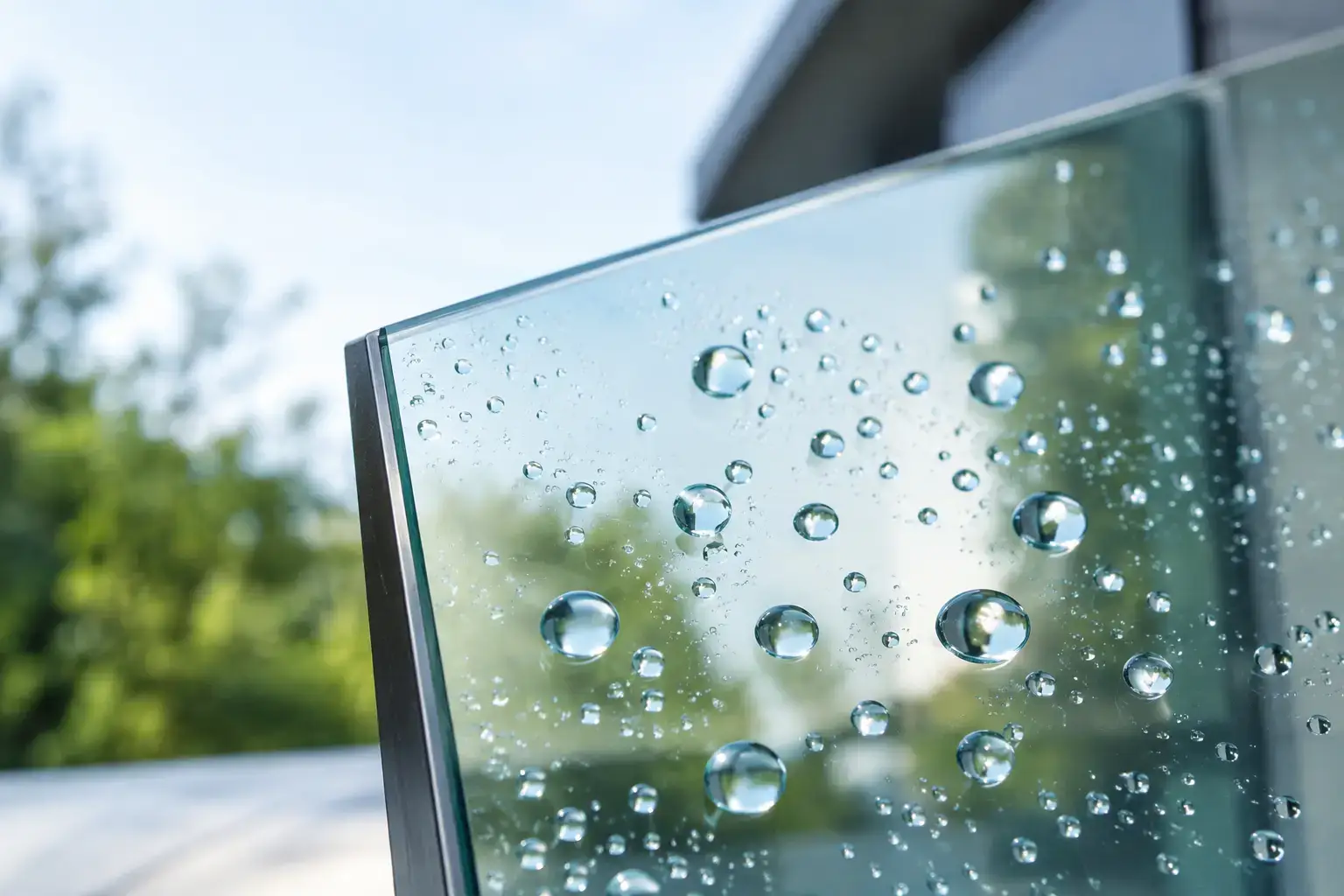
A shower enclosure can look new at installation and visibly aged within months when hard water dries on untreated glass. The issue is not simply water. As droplets evaporate, they leave behind minerals that bond to the surface, creating spots, haze, and stubborn scale. Hydrophobic glass changes that maintenance equation by helping water sheet off or bead and roll away before contaminants have as much opportunity to dry in place.
For glass fabricators, glazing professionals, automotive businesses, and property owners, the appeal is practical: cleaner-looking surfaces, less labor-intensive maintenance, and a more durable customer experience. But water repellency alone does not determine performance. The coating chemistry, surface preparation, application process, expected use conditions, and aftercare program all affect the result.
What makes glass hydrophobic?
Glass is a silica-based surface with microscopic peaks and valleys. Although it may appear smooth, untreated glass provides places for water, soap residue, airborne contaminants, and mineral deposits to cling. A hydrophobic coating modifies the surface at a molecular level, lowering its surface energy so water is less likely to spread and remain on the glass.
The familiar visual effect is beading: droplets pull together instead of flattening across the surface. On a vertical shower door, windshield, or railing, those droplets can move away more readily with gravity, airflow, or normal rinsing. Less retained water generally means fewer opportunities for mineral deposits and soap scum to accumulate.
That does not mean treated glass never gets dirty. Hydrophobic performance is a maintenance advantage, not a force field. Dust, oils, shampoo residue, road film, and exceptionally hard water can still affect appearance. The meaningful difference is that contaminants are typically easier to remove before they become bonded deposits or permanent-looking stains.
Hydrophobic glass versus temporary water repellents
Not every product that beads water offers the same level of protection. Temporary sprays, waxes, and silicone-based treatments can improve water behavior quickly, but they may wear away rapidly with cleaning, weather exposure, abrasion, or heat. They can be useful for short-term improvement, yet they should not be confused with a professionally applied protective coating designed for long-term surface protection.
A higher-performance hydrophobic glass treatment is engineered to chemically bond with the silica in glass. This type of molecular bond is intended to become part of the surface rather than sit on top as a sacrificial film. The objective is improved durability without changing the glass’s intended clarity or appearance.
For commercial and manufacturing partners, that distinction matters. A durable coating platform can support product differentiation, repeatable application procedures, warranty programs, maintenance product sales, and a clearer value proposition at the point of sale. A short-lived topical product may create a visible initial effect, but it does not always deliver the long-term maintenance story customers expect.
Where hydrophobic protection delivers the most value
The strongest applications are surfaces exposed to repeated water contact, mineral-rich water, soap, weather, or difficult cleaning conditions. The value case changes by market, but the goal remains the same: preserve clarity while reducing the effort required to maintain it.
Shower doors and bathroom glass
Shower glass is one of the most demanding environments for untreated surfaces. Daily exposure to warm water, body oils, soap, shampoo, and hard-water minerals creates the conditions for buildup. Once etching or deeply embedded staining develops, conventional cleaning may no longer restore a clear finish.
Hydrophobic protection helps homeowners and hospitality operators spend less time managing that cycle. Water and residue are easier to remove with a squeegee and appropriate aftercare cleaner, which can reduce the need for harsh chemicals and aggressive scrubbing. For shower-door manufacturers and dealers, treated glass is also a compelling upgrade because it addresses a highly visible customer concern before the enclosure is installed.
Automotive windshields and exterior glass
On a windshield, hydrophobic behavior can improve wet-weather visibility by helping rain move off the glass more efficiently at speed. It may also make road film, insect residue, and mineral spotting easier to clean. Performance varies with vehicle speed, wiper condition, weather, and cleaning habits, so it should not be positioned as a replacement for safe driving practices or properly functioning wipers.
Dealerships and automotive service providers can use glass protection as a practical add-on with benefits customers understand immediately: clearer sightlines, easier cleaning, and improved appearance. The best programs pair the coating with clear customer instructions for maintenance and realistic expectations for wear areas such as windshield wiper paths.
Architectural glass, railings, and exterior glazing
Exterior glass faces rain, dust, pollution, irrigation overspray, salt exposure, and inconsistent access for cleaning crews. On high-rise façades, balcony railings, storefronts, and transit-facing glazing, reducing soil adhesion can help lower cleaning difficulty and protect the intended visual impact of the project.
The right specification depends on the environment. A coastal installation, for example, faces different exposure than an inland office façade. Glass type, fabrication sequence, installation method, cleaning access, and local water quality should be reviewed before a coating is selected. Architects and glazing contractors gain the most value when protective glass requirements are considered early, rather than treated as a last-minute maintenance fix.
Surface preparation determines coating performance
Even advanced coating chemistry cannot compensate for a contaminated or damaged substrate. Oils, fabrication residue, mineral staining, silicone transfer, and existing sealants can interfere with bonding. Preparation begins with a close inspection of the glass and a determination of whether the surface is clean, stained, etched, scratched, or previously treated.
Restoration may be necessary before coating application. Removing mineral deposits and contamination gives the coating a suitable surface to bond to and gives the customer a more consistent final appearance. If permanent corrosion or mechanical damage is already present, a coating may reduce future staining but cannot make the underlying damage disappear.
For fabricators and high-volume processors, application consistency is equally important. Controlled machinery, documented procedures, trained personnel, and quality checks help ensure that every panel receives the intended treatment. Diamon-Fusion International supports this full-system approach with patented coating technology, application equipment, restoration solutions, and aftercare products built around the realities of glass processing and long-term maintenance.
Maintenance still matters
Protected glass is easier to maintain, not maintenance-free. The most effective routine is simple: rinse away residue when possible, use a soft squeegee on shower glass, and clean with products appropriate for coated surfaces. Abrasive pads, harsh acids, and cleaners that leave heavy residues can undermine both appearance and coating performance.
Facilities teams should also consider the source of recurring contamination. Irrigation directed at glass, leaking shower fixtures, poor drainage, and hard water can overwhelm even well-protected surfaces over time. Correcting those conditions often produces a better result than increasing cleaning frequency alone.
For consumer-facing businesses, aftercare guidance should be part of the sale. A customer who understands how to care for treated glass is more likely to see the expected benefit, protect the finish, and view the investment as worthwhile.
How to evaluate a hydrophobic glass solution
A product demonstration can be useful, but water beading should not be the only decision criterion. Ask how the coating bonds to glass, what preparation is required, which surfaces it is designed for, and how performance is validated over time. Review the warranty terms, maintenance requirements, training support, and whether the supplier can support the application method your operation needs.
For commercial projects, evaluate more than the coating itself. Consider application capacity, project scheduling, field or factory installation options, restoration capabilities, and the ability to provide consistent documentation across locations. A coating program becomes more valuable when it fits the operational workflow rather than adding avoidable complexity.
The best time to protect glass is before water spots, soap scum, and environmental exposure become a costly restoration problem. When the coating, application process, and aftercare plan are matched to the environment, hydrophobic glass becomes a practical way to preserve clarity and reduce the work required to keep it that way.