
DOES DIAMON-FUSION® MAKE SHOWER DOORS SLIP? THE TEST RESULTS SAY NO
A No. A 171.99 lb. Diamon-Fusion-coated door just ran 456,094 cycles on hinges rated for 170 lbs., with no failures.
By Adam Zax, Founder and President, Diamon-Fusion International
Since I founded DFI in 1997, we have built our reputation on measurable performance. Questions have been raised about whether Diamon-Fusion® affects the fit and function of frameless shower-door hinge systems and the adhesion of certain silicones and sealants to treated glass.
Five separate sets of test results, including one not commissioned by DFI, evaluated the coating’s performance across these applications. The results consistently support the coating’s reliability.
The most recent test results originated from Frameless Hardware Company (FHC), the hardware leader in heavy shower doors. I learned about it in a conversation with Danny Donahue, FHC’s shower brand manager, at GlassBuild. Here’s what the testing reveals.
Why Heavy Doors Actually Slip
Long before protective coatings existed, heavy glass doors would slip out of their hinges.
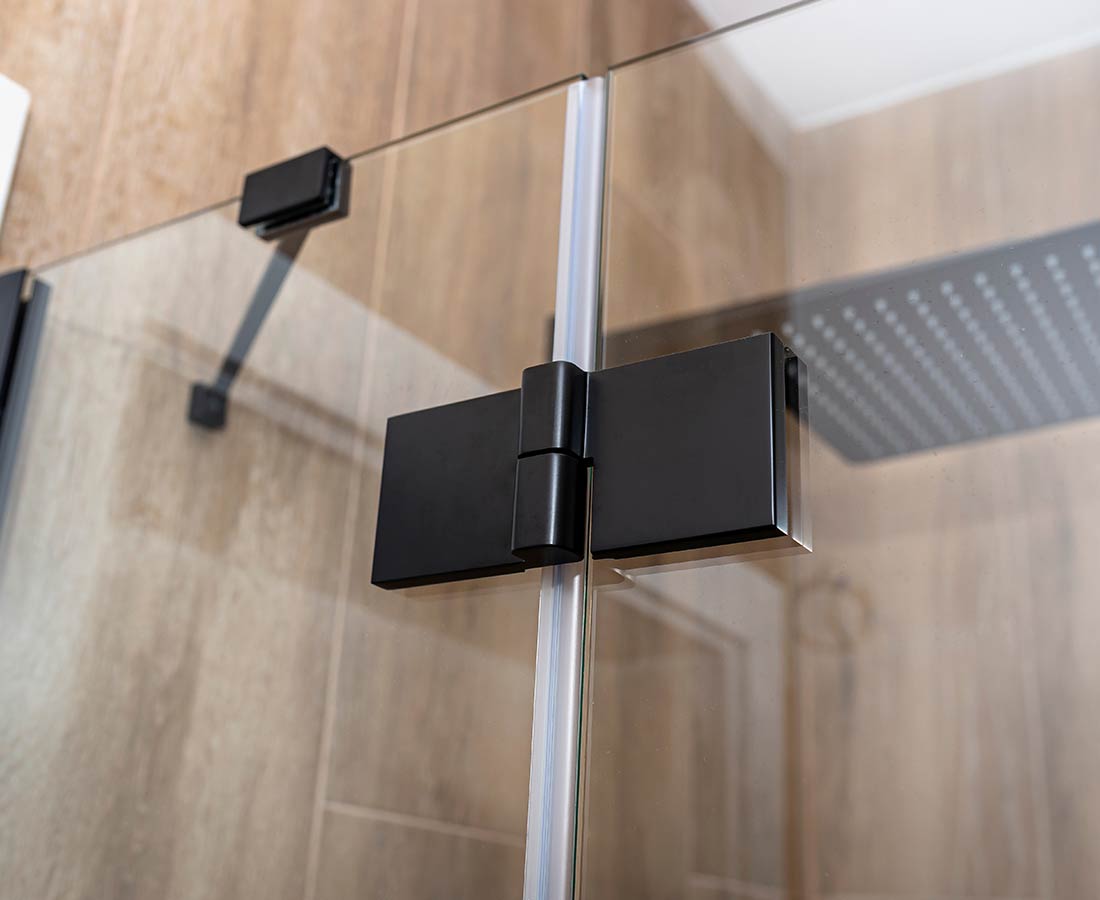
The cause is almost always the hinge clamp. A hinge holds the glass by squeezing it between two plates through a gasket. If that squeeze is weak, the door creeps down. Common reasons:
- Wrong gasket. In one known case, a major hinge maker shipped tens of thousands of hinges with gaskets of the wrong hardness and thickness. The screws bottomed out before they could clamp the glass.
- Low-quality hinges. Many design flaws have been engineered out of good hardware, but cheap hinges still make it to market.
- Installation. Under-torqued screws, missing gaskets, or doors heavier than the hinge rating.
None of these have anything to do with what’s on the glass surface. FHC’s hinge test: 4.5x the goal, over the weight limit. The company ran a four-month endurance test on its second-generation Valore hydraulic self-closing hinge, using the ANSI/BHMA A156.17 test method for self-closing hinges. The door was 1/2″ tempered glass coated with Diamon-Fusion®.
Test Detail Result
- Hinge: FHC Valore hydraulic, P/N HVALF1MB (2 hinges)
- Door: 44″ x 86″ x 1/2″ tempered, Diamon-Fusion® coating
- 170 lbs. hinge rating, 44″ max width
- Actual door weight: 171.99 lbs.
- Cycle goal: 100,000
- Cycles completed: 456,094
- Failures: No structural, mechanical, or hydraulic failure
Glass displacement: 0.019″ at 100,000 cycles; held at 0.024″ from 396,202 cycles to the end
The door exceeded the hinge’s maximum rated weight and ran more than 4.5 times the cycle goal. The test stopped only because FHC asked it to stop.
FHC’s engineers concluded the hinge performed consistently throughout and is ready to move toward production validation.
FHC has confirmed we may share these results for its hydraulic hinge line.
Independent Engineering Firms Agree
The FHC result matches what we found years ago. We hired Smith Emery, an independent engineering and testing firm, to test the slip claim directly. Their testing showed the claim was not just wrong but backward: hinge-clamped glass with Diamon-Fusion was less likely to slip than uncoated glass.
One result came from an independent lab we hired. The other came from the industry’s leading hinge maker, on its own equipment, for its own purposes. The results exhibit a consistent pattern across all testing.
Sealants bond to it: GE, Sika, and Fenzi.
Three of the biggest sealant makers tested their products on Diamon-Fusion-coated glass. Every product passed.
Lab Products Tested Method Result
- GE Silicones / Momentive (2022, NY22-11492)
- 19 GE silicones, incl. structural glazing (SSG) and insulating glass (IGS) grades; hand- and machine-coated glass ASTM C794, ETAG 002, ISO 23658 adhesion; ASTM C1087 compatibility.
- Adhesion attained on all; rating 0 (no color change); deemed compatible
- Sika (2020, DFI-A-2006).
- 7 Sikasil silicones incl. SG 10, N Plus, WS 295, WS 305AM, GP; hand-applied and vapor coatings.
- ASTM C794 peel, after 1-week cure and 1-week water immersion.
- 100% cohesive failure on all; 12 to 52 PLI; no discoloration or coating change.
- Fenzi North America (2019)
- Thiover polysulphide, Butylver PIB, Hotver A+, Sealver silicone; DF1, DF2, and both combined; IFT Rosenheim, 28 days at 77°F and 158°F.
No Change at Any Interval: Compatible
In other words, the sealant failed before it bonded to the coated glass, which is what a good bond looks like. Every Sika result cleared the 5 PLI minimum in ASTM C920. Sika also found that a mild soap-and-water cleaning gave virtually the same results as an IPA wipe.
As with any sealant job, follow the maker’s prep instructions and confirm adhesion at the point of use.
The Bottom Line
If a coated door slips, check the hinge, gasket, and installation, not the Diamon-Fusion® coating.
- Fabricators and installers: use quality hardware with the correct gaskets, torque screws to spec, and stay within the hinge’s weight rating. Diamon-Fusion® won’t get in the way.
- Homeowners: you don’t have to choose between a protected shower and a secure door. You can have both.
Contact DFI to request copies of these reports.
About Diamon-Fusion International
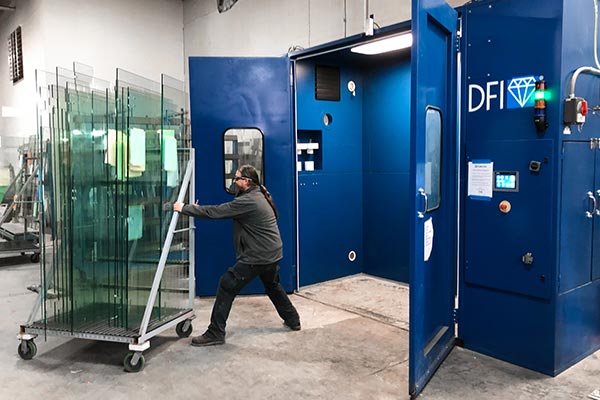
Diamon-Fusion International (DFI) is one of the largest hydrophobic coating suppliers in the world. The company specializes in the development of easy-to-clean, protective coatings, restoration products, and automated machinery for the glass industry, as well as other silica-based surfaces.
Social Media Channels
DOES DIAMON-FUSION MAKE SHOWER DOORS SLIP? THE TEST RESULTS SAY NO
A No. A 171.99 lb. Diamon-Fusion-coated door just ran 456,094 cycles on hinges rated for 170 lbs., with no failures.
By Adam Zax, Founder and President, Diamon-Fusion International
Since I founded DFI in 1997, we have built our reputation on measurable performance. Questions have been raised about whether Diamon-Fusion® affects the fit and function of frameless shower-door hinge systems and the adhesion of certain silicones and sealants to treated glass.
Five separate sets of test results, including one not commissioned by DFI, evaluated the coating’s performance across these applications. The results consistently support the coating’s reliability.
The most recent test results originated from Frameless Hardware Company (FHC), the hardware leader in heavy shower doors. I learned about it in a conversation with Danny Donahue, FHC’s shower brand manager, at GlassBuild. Here’s what the testing reveals.
Why heavy doors really slip
Long before any protective coating existed, heavy glass doors would slip in their hinges.
The cause is almost always the hinge clamp. A hinge holds the glass by squeezing it between two plates through a gasket. If that squeeze is weak, the door creeps down. Common reasons:
- Wrong gasket. In one known case, a major hinge maker shipped tens of thousands of hinges with gaskets of the wrong hardness and thickness. The screws bottomed out before they could clamp the glass.
- Low-quality hinges. Many design flaws have been engineered out of good hardware, but cheap hinges still make it to market.
- Installation. Under-torqued screws, missing gaskets, or doors heavier than the hinge rating.
None of these have anything to do with what’s on the glass surface. FHC’s hinge test: 4.5x the goal, over the weight limit. The company ran a four-month endurance test on its second-generation Valore hydraulic self-closing hinge, using the ANSI/BHMA A156.17 test method for self-closing hinges. The door was 1/2″ tempered glass coated with Diamon-Fusion®.
Test Detail Result
- Hinge: FHC Valore hydraulic, P/N HVALF1MB (2 hinges)
- Door: 44″ x 86″ x 1/2″ tempered, Diamon-Fusion® coating
- 170 lbs. hinge rating, 44″ max width
- Actual door weight: 171.99 lbs.
- Cycle goal: 100,000
- Cycles completed: 456,094
- Failures: No structural, mechanical, or hydraulic failure
- Glass displacement: 0.019″ at 100,000 cycles; held at 0.024″ from 396,202 cycles to the end
The door exceeded the hinge’s maximum rated weight and ran more than 4.5 times the cycle goal. The test only stopped because FHC asked for it to stop.
FHC’s engineers concluded the hinge performed consistently throughout and is ready to move toward production validation.
FHC has confirmed we may share these results for its hydraulic hinge line.
Independent Engineering Firms Agree
The FHC result matches what we found years ago. We hired Smith Emery, an independent engineering and testing firm, to test the slip claim directly. Their testing showed the claim was not just wrong but backward: hinge-clamped glass with Diamon-Fusion was less likely to slip than uncoated glass.
One result came from an independent lab we hired. The other came from the industry’s leading hinge maker, on its own equipment, for its own purposes. The results exhibit a consistent pattern across all testing.
Sealants bond to it: GE, Sika, and Fenzi.
Three of the biggest sealant makers tested their products on Diamon-Fusion-coated glass. Every product passed.
Lab Products Tested Method Result
- GE Silicones / Momentive (2022, NY22-11492)
- 19 GE silicones, incl. structural glazing (SSG) and insulating glass (IGS) grades; hand- and machine-coated glass ASTM C794, ETAG 002, ISO 23658 adhesion; ASTM C1087 compatibility.
- Adhesion attained on all; rating 0 (no color change); deemed compatible
- Sika (2020, DFI-A-2006).
- 7 Sikasil silicones incl. SG 10, N Plus, WS 295, WS 305AM, GP; hand-applied and vapor coatings.
- ASTM C794 peel, after 1-week cure and 1-week water immersion.
- 100% cohesive failure on all; 12 to 52 PLI; no discoloration or coating change.
- Fenzi North America (2019)
- Thiover polysulphide, Butylver PIB, Hotver A+, Sealver silicone; DF1, DF2, and both combined; IFT Rosenheim, 28 days at 77°F and 158°F.
No Change at Any Interval; Compatible
In other words, the sealant failed before it bonded to the coated glass, which is what a good bond looks like. Every Sika result cleared the 5 PLI minimum in ASTM C920. Sika also found that a mild soap-and-water cleaning gave virtually the same results as an IPA wipe.
As with any sealant job, follow the maker’s prep instructions and confirm adhesion at the point of use.
The Bottom Line
If a coated door slips, check the hinge, gasket, and installation, not the Diamon-Fusion® coating.
- Fabricators and installers: use quality hardware with the correct gaskets, torque screws to spec, and stay within the hinge’s weight rating. Diamon-Fusion® won’t get in the way.
- Homeowners: you don’t have to choose between a protected shower and a secure door. You can have both.
Contact DFI to request copies of these reports.
READY TO PROTECT YOUR SHOWER GLASS?
Diamon-Fusion® is available through a network of Certified Diamon-Fusion® Dealers throughout the country who are professionally trained and equipped to protect your shower doors. For new shower door applications, please use the Online Dealer Locator below. For existing glass applications, please visit www.shopdfi.com.


About Diamon-Fusion International
Diamon-Fusion International (DFI) is one of the largest hydrophobic coating suppliers in the world. The company specializes in the development of easy-to-clean, protective coatings, restoration products, and automated machinery for the glass industry, as well as other silica-based surfaces.