
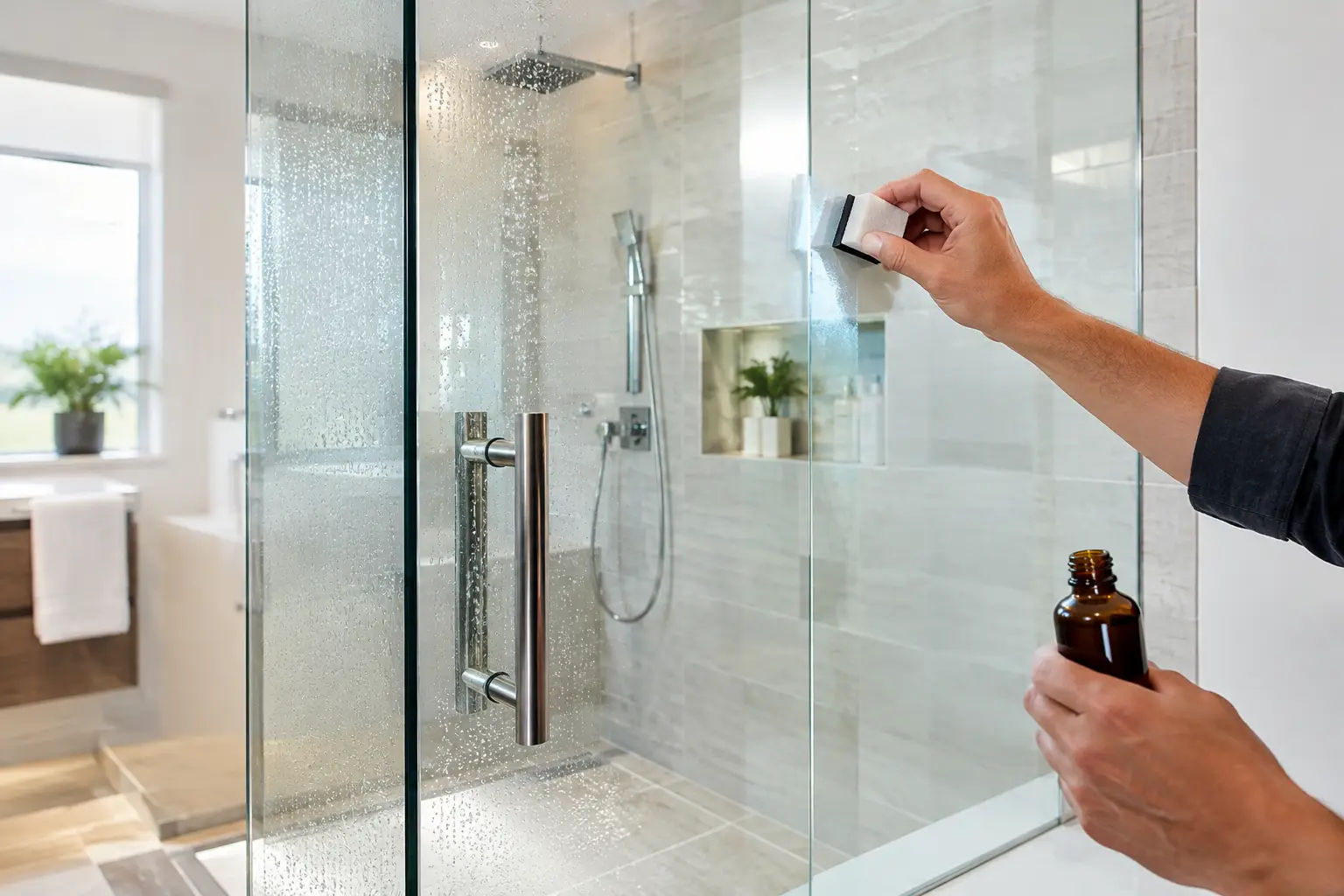
A frameless shower enclosure is designed to put the glass on display. Unfortunately, clear glass also puts every hard-water spot, soap film, and drip mark on display. The best coating for frameless shower doors is one that changes how water interacts with the glass itself – helping water bead and sheet away before minerals and soap residue can dry into a visible haze.
That distinction matters. Many products can make shower glass look better for a few days. Far fewer provide durable protection that supports easier maintenance, preserves clarity, and gives installers, fabricators, and homeowners a credible long-term care story.
What the Best Coating for Frameless Shower Doors Must Do
A high-performing shower-door coating should be hydrophobic, meaning it repels water at the surface. When water does not spread and cling as readily, there is less opportunity for dissolved minerals to remain behind as white spots or scale. Soap scum is also less likely to build into a stubborn film.
But water repellency alone is not the full test. Frameless shower doors are frequently exposed to heat, humidity, body oils, shampoos, alkaline cleaners, and hard-water minerals. A suitable coating needs to be optically clear, compatible with glass, and durable enough to withstand normal cleaning without becoming patchy or creating a cloudy appearance.
For professional applications, the strongest option is typically a glass-specific protective coating engineered to bond with silica-based surfaces. Unlike a temporary topical treatment that sits loosely on the surface, this type of technology is designed to create a more lasting protective barrier while maintaining the natural look of the glass.
Why Frameless Enclosures Need More Than Standard Glass Cleaner
Uncoated glass is not perfectly smooth at a microscopic level. Its surface contains small peaks and valleys where water, minerals, and soap residue can collect. Over time, these deposits can etch or stain the surface, making the door increasingly difficult to restore with ordinary cleaning.
Standard glass cleaner removes some fresh residue, but it does not prevent the next shower from leaving new deposits. Abrasive pads and harsh chemicals may seem effective in the moment, yet repeated use can damage hardware finishes, leave scratches, or create a cycle of more aggressive cleaning.
A protective coating shifts the maintenance equation. It does not make a shower door maintenance-free, especially in areas with very hard water. It reduces adhesion and buildup, so routine cleaning takes less effort and the enclosure retains a cleaner appearance between cleanings. For homeowners, that means fewer hours spent fighting haze. For glass professionals, it means a more valuable finished installation and fewer avoidable service concerns.
Coating Is Not the Same as a Water-Repellent Spray
Consumer sprays and wipe-on water repellents can provide short-term beading. They can be useful as a temporary maintenance measure, but their performance often declines quickly under daily shower conditions. Some leave streaks, alter the feel of the glass, or require frequent reapplication.
A professionally applied, purpose-built coating is a different category. The goal is not simply dramatic water beading on day one. The goal is durable surface protection that improves cleanability over the service life of the shower enclosure.
This is especially relevant for frameless doors because their clean, minimal design leaves little room to hide spotting. There are no heavy frames to distract from discoloration at the edges, and large panels make mineral buildup visible from across the bathroom.
How to Evaluate Shower Glass Coating Options
The right choice depends on the water conditions, project type, application method, and expected maintenance plan. A luxury residential bath with softened water has different demands than a hospitality property with high turnover and mineral-heavy municipal water. Still, buyers should assess every option against the same practical criteria.
Surface compatibility. The coating should be designed for glass and other silica-based surfaces. Avoid generalized treatments that are marketed for every material but provide little information about how they perform on shower glass.
Durability under shower conditions. Ask how the product performs with repeated water exposure, normal cleaning, humidity, and common bath products. A coating should support a realistic care routine, not depend on ideal laboratory conditions.
Optical clarity. Frameless glass must remain clear. The coating should not tint, cloud, or produce visible residue when properly applied.
Application quality. Coating performance is closely tied to preparation. Glass must be clean and free of existing scale, residue, fingerprints, and fabrication contaminants before application. A premium coating applied over contamination cannot deliver its intended result.
Aftercare requirements. Every coating needs an appropriate maintenance plan. The best programs explain which cleaners to use, which products to avoid, and how to address early signs of buildup before they become permanent staining.
Warranty and support. For fabricators, shower-door dealers, and glaziers, a coating platform backed by training, documented processes, restoration products, and warranty support can be more valuable than a bottle of chemistry alone.
The Role of Professional Application
Professional application is often the best route for new frameless shower installations. It allows the coating to be applied when the glass is at its cleanest and before daily exposure begins. It also gives the installer an opportunity to verify that the panel has been properly prepared and that the customer receives clear care instructions.
For glass businesses, this creates an opportunity to differentiate beyond hardware and panel fabrication. A coated enclosure can be positioned as a performance upgrade: clearer glass, reduced maintenance, and greater protection against the effects of hard water. That value proposition can support healthier margins while giving customers a practical reason to choose a higher-specification package.
A complete system matters here. Diamon-Fusion International, for example, supports glass protection with patented coating technology, application equipment, restoration solutions, and aftercare products. That kind of integrated approach helps professionals deliver consistent results rather than treating protective coating as an isolated add-on.
Existing Doors Can Still Benefit
A new installation is ideal, but an existing shower door is not automatically disqualified. The critical question is surface condition. If mineral staining and soap scum are superficial, professional restoration may return the glass to a condition suitable for coating.
If staining has progressed to deep etching, complete restoration may not be possible. A coating can improve future maintenance, but it cannot erase physical damage that has already altered the glass surface. This is why early protection is generally more cost-effective than waiting until the door looks permanently cloudy.
Maintenance Still Determines Long-Term Results
Even the best coating for frameless shower doors should be paired with simple, consistent care. The most effective habit is using a squeegee after showering. Removing standing water limits the minerals available to dry on the surface, particularly in hard-water regions.
Use a non-abrasive cleaner that is compatible with the coating and avoid harsh scouring powders, steel wool, and highly aggressive chemicals unless the coating provider specifically approves them. These products can compromise the protective layer or scratch the glass, creating more places for contaminants to lodge.
Bathroom ventilation also helps. Reducing persistent humidity allows the enclosure to dry faster and limits the conditions that encourage residue buildup. For commercial facilities, a written cleaning protocol is worth the effort: it standardizes staff practices and protects the value of the installed glass package.
The Business Case for Better Shower Glass Protection
For fabricators and shower-door professionals, a durable coating is not merely a cosmetic feature. It is a way to offer a more complete solution. Customers increasingly expect high-end bathrooms to remain visually clean without demanding intensive maintenance, and glass protection directly addresses that expectation.
The operational benefits can extend beyond the sale. When the coating process is repeatable and supported by proper equipment and training, shops can integrate it into production or installation workflows. Dealers can also pair the initial treatment with appropriate aftercare products and service guidance, creating an ongoing customer relationship instead of a one-time transaction.
Architects and specifiers can view coated shower glass through a lifecycle lens. A modest upfront investment may reduce cleaning labor, preserve appearance, and help avoid premature replacement driven by staining or difficult-to-remove buildup. The savings will vary by water quality and cleaning practices, but the direction is clear: protected glass is easier to maintain than unprotected glass.
Choose a coating engineered for glass, applied over a properly prepared surface, and supported by realistic aftercare. That is how a frameless shower door stays focused on what it was meant to show – clean lines, clear glass, and a bathroom that looks finished long after installation day.